


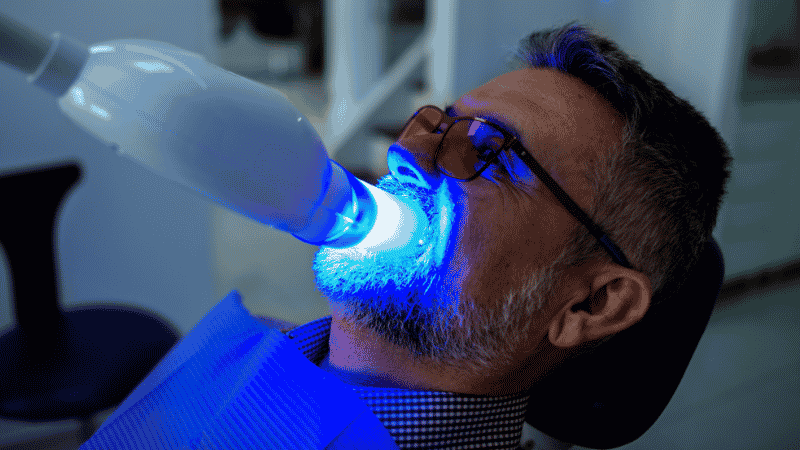
You followed the instructions on the whitening strips. You brushed with the special toothpaste for weeks. You might have even tried those LED lights or custom trays. And still your teeth whitening is not working?
Teeth whitening doesn’t always work because the type of stain, the condition of your enamel, existing dental work, or buildup on your teeth can block the whitening agents from doing their job.
Whitening only works on natural tooth structure, and it has limits when discoloration sits deeper inside the tooth or when other factors get in the way.
The good news is that once you figure out why your teeth aren’t responding, you can take steps that actually make a difference.
This guide breaks down the most common reasons teeth whitening results fall short and what you can do instead.
You’ll learn how to spot the difference between surface stains and deeper discoloration, why oral health matters before you whiten, and which solutions work when standard products don’t.
Key Takeaways
- Whitening products only work on natural teeth and surface stains, not on crowns, fillings, or internal discoloration
- Professional cleaning removes plaque and tartar that can block whitening agents from reaching your enamel
- Options like bonding or veneers can address stains that don’t respond to bleaching alone
Table of Content
- Identifying the Type of Tooth Stains
- Why Over-the-Counter Whitening Fails for Many People
- When Dental Work Prevents Teeth Whitening Success
- The Importance of Oral Health and Professional Cleaning
- Proven Solutions When Standard Whitening Doesn’t Work
- Frequently Asked Questions
Identifying the Type of Tooth Stains
Not all stains are the same, and knowing which type you have changes what will actually work. Surface stains respond differently than deeper discoloration that sits inside the tooth structure.

Extrinsic Stains vs. Intrinsic Stains
Extrinsic stains sit on the outer layer of your teeth. They develop on the enamel surface from things that touch your teeth every day. These surface stains usually respond well to whitening products because bleaching agents can reach them directly.
Intrinsic stains form inside the tooth. They affect the dentin, which is the layer underneath the enamel.
Intrinsic tooth stains are more resistant to whitening than surface stains because bleach can’t reach deep into the tooth structure.
The difference matters because you can scrub or bleach extrinsic stains away with the right products. Internal stains don’t budge the same way, no matter how strong the whitening gel is.
Common Causes of Surface and Internal Discoloration
Extrinsic stains come from:
- Coffee, tea, and red wine
- Tobacco use and smoking
- Dark sodas and berries
- Poor brushing habits that let plaque build up
Intrinsic stains develop from:
- Fluorosis from too much fluoride during childhood
- Certain antibiotics taken while teeth were forming
- Dental trauma that damaged the tooth from inside
- Natural aging as enamel thins and more dentin shows through
- Certain diseases and metabolic disorders that affect tooth development
Tobacco stains can be stubborn but usually stay on the surface. Fluorosis creates white or brown spots that sit deeper in the enamel and won’t respond to standard whitening.
Spotting Intrinsic Tooth Stains at Home
Look at the color and pattern of your discoloration. Yellow or brown tones that cover all your teeth evenly often point to surface stains from food and drinks.
Gray discoloration on a single tooth can signal past trauma or internal changes. White spots or patches that don’t match the rest of your tooth color may indicate fluorosis or uneven enamel formation.
If your teeth look yellow even right after a professional cleaning, the color is likely coming from the dentin underneath your enamel rather than surface buildup.
Teeth naturally darken with age as more dentin shows through thinner enamel.
You can also notice how your teeth respond to whitening attempts. If you see no change after following directions carefully, the stain is probably intrinsic rather than on the surface.
Why Over-the-Counter Whitening Fails for Many People
Store-bought whitening products often contain weaker bleaching agents and don’t fit your teeth properly, which limits how well they can remove stains.
The concentration of active ingredients and how the product contacts your enamel make a big difference in results.
Limitations of Whitening Toothpaste and Whitening Strips
Whitening toothpaste only removes surface stains through mild abrasives and doesn’t change your tooth color. These toothpastes work by scrubbing away external discoloration from coffee or tea, but they can’t penetrate deeper into your enamel.
Whitening strips face different problems that limit their effectiveness. The generic shape of whitening strips means the gel never makes full contact with all your tooth surfaces.
You’ll often see brighter results in the center of your teeth but darker areas near your gumline and between teeth.
The strips also slide around in your mouth, which creates uneven coverage. They don’t stay put on curved tooth surfaces or reach into the spaces between your teeth where stains accumulate.
Most over-the-counter whitening products keep their hydrogen peroxide levels intentionally low for consumer safety.
This weaker formula requires more time and consistent use to see any change, and many people give up before completing the full treatment.
The Role of Hydrogen Peroxide and Carbamide Peroxide
Hydrogen peroxide and carbamide peroxide are the two main bleaching agents that actually lighten tooth color. Over-the-counter products typically contain 3% to 10% hydrogen peroxide, while professional treatments use 25% to 40% concentrations.
Carbamide peroxide breaks down into hydrogen peroxide and urea when it contacts your teeth. It works more slowly than straight hydrogen peroxide but causes less sensitivity for some people.
The lower concentration in store-bought products means they need much longer contact time with your teeth to produce visible results.
If you have significant staining, consumer-grade products may not provide sufficient bleaching power to reach the level of whiteness you want.
Look for products with the ADA Seal of acceptance, which means they’ve been tested for safety and effectiveness. However, even products with the ADA Seal still contain lower concentrations than what your dentist can provide.
Custom-Fitted Trays vs. Whitening Strips
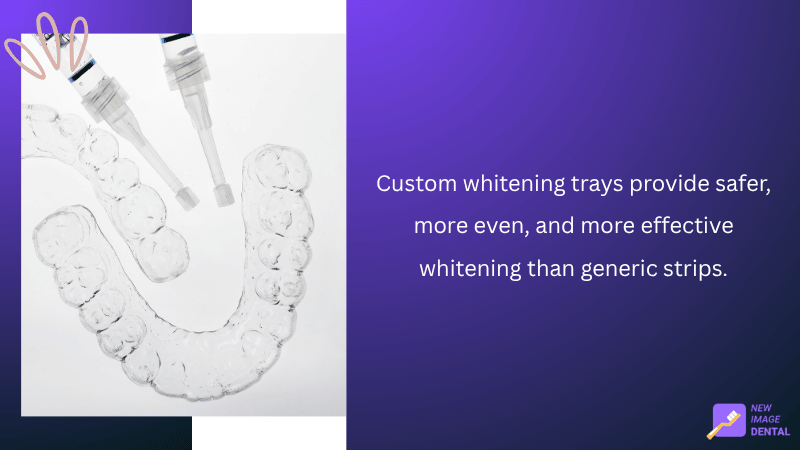
Custom-fitted trays from your dentist are made from molds of your actual teeth. This precise fit ensures the whitening gel covers all your tooth surfaces evenly and stays in place during treatment.
Take-home trays hold stronger whitening gel against your teeth without gaps or sliding. The custom fit also protects your gums from irritation by keeping the bleaching agent exactly where it needs to be.
Generic whitening strips can’t adapt to your unique tooth shape and alignment. They leave gaps where stains remain untouched and may overlap onto your gums, causing sensitivity or irritation.
Professional take-home trays combined with prescription-strength gel give you the control of at-home treatment with results that match in-office procedures.
You wear them for the time your dentist recommends, typically 30 minutes to a few hours daily for two to four weeks.
When Dental Work Prevents Teeth Whitening Success
Whitening products only work on natural tooth enamel, which means any artificial materials in your mouth won’t change color no matter how strong the bleaching gel is.
This creates a common problem where your natural teeth brighten but your dental work stays the same shade.
Crowns, Veneers, and Fillings
Your dental restorations don’t respond to whitening treatments because they’re made from materials like porcelain, ceramic, or composite resin. These materials are colored when they’re created and that color is permanent.
If you have crowns on your front teeth, they’ll stay the exact same shade while your natural teeth around them get lighter. The same goes for any fillings you can see when you smile.
Your dentist matched these restorations to your natural tooth color when you got them. But once you whiten your teeth, that match no longer works.
The artificial teeth will look darker or more yellow compared to your newly whitened natural teeth.
Porcelain Veneers and Composite Bonding
Porcelain veneers are stain-resistant but they can’t be whitened once they’re on your teeth. The porcelain material is baked at a specific shade and remains that color permanently.
Composite bonding is even more problematic because it can pick up stains from coffee, tea, and wine over time. However, dental bonding won’t lighten with whitening treatments either.
The composite material just doesn’t react to bleaching agents the way natural enamel does.
If you’re planning to get veneers or bonding, you should whiten your natural teeth first. Then your dentist can match the new dental work to your brighter smile.
Color Imbalance After Whitening
You might end up with a noticeable color difference between your whitened natural teeth and your unchanged dental work. This happens most often with front teeth crowns or visible fillings.
Some people don’t realize they have dental bonding on their front teeth until they try whitening. The bonding stays darker while everything around it brightens.
Your options for fixing this include:
- Replacing old restorations with new ones that match your whitened teeth
- Having your dentist polish stained composite bonding
- Getting new veneers in a lighter shade
- Accepting the color difference if it’s not very noticeable
Replacing dental work can be expensive, so talk to your dentist before you start any whitening treatment. They can tell you which teeth have restorations and help you decide if whitening makes sense for your situation.
The Importance of Oral Health and Professional Cleaning
Your teeth need to be healthy and clean before whitening treatments can work properly. Plaque buildup, enamel damage, and untreated dental problems create barriers that prevent whitening products from reaching the stains you want to remove.
How Plaque and Tartar Block Whitening
Plaque and tartar act like a shield on your teeth that blocks whitening agents from doing their job. When you skip regular brushing or forget to floss, plaque hardens into tartar that only a dentist can remove.
Whitening products need direct contact with your tooth enamel to work. If tartar covers your teeth, the bleaching agents can’t reach the actual tooth surface.
This means you might use whitening strips or gels without seeing any results.
Professional dental cleanings remove this barrier and reveal the true color of your teeth. Your dentist uses special tools to scrape away buildup that regular brushing misses.
After a cleaning, whitening treatments can penetrate your enamel and break down stains more effectively.
Thin Enamel and Aggressive Brushing
Brushing too hard wears down your enamel over time. Thin enamel exposes the yellow dentin layer underneath, which makes your teeth look darker even after whitening.
You might think scrubbing harder makes teeth cleaner, but aggressive brushing damages the protective outer layer. Once enamel wears away, it doesn’t grow back.
The dentin that shows through is naturally yellow and doesn’t respond well to whitening products.
Signs of thin enamel include:
- Increased tooth sensitivity to hot or cold
- Yellowing that doesn’t improve with whitening
- Transparent edges on front teeth
- Rough or uneven tooth surfaces
Use a soft-bristled toothbrush and gentle pressure to protect your enamel. If you’ve already damaged your enamel, whitening treatments may not deliver results you expect.
Cavities and Gum Protection Considerations
Teeth whitening treatments work best on healthy teeth and gums. Cavities create holes where whitening gel can seep into the inner tooth and cause pain.
When you have untreated tooth decay, the bleaching chemicals can reach the sensitive nerves inside your tooth. This creates sharp pain and can damage the tooth further.
Gum disease also makes whitening risky because inflamed gums are more sensitive to the chemicals in whitening products.
Your dentist needs to treat these problems first:
- Active cavities – Must be filled before whitening
- Gum disease – Requires treatment to reduce inflammation
- Exposed roots – Need protection from harsh bleaching agents
Schedule a dental exam before you start any whitening treatment. Your dentist can identify problems that need fixing and tell you when it’s safe to whiten.
Proven Solutions When Standard Whitening Doesn’t Work
When over-the-counter products fall short, stronger treatment options and cosmetic alternatives can address stubborn discoloration that basic whitening can’t fix.
These approaches work on deeper stains, worn enamel, and situations where bleaching alone won’t create the result you want.
Professional Whitening vs. In-Office Treatments
Professional teeth whitening uses stronger bleaching agents than store-bought kits. Your dentist can provide custom trays that fit your teeth precisely and prescription-strength gel for home use.
In-office whitening delivers even faster results in a single visit. The dentist applies a high-concentration peroxide gel to your teeth and may use a special light to speed up the process.
This method works well for surface stains that haven’t responded to weaker products.
The key difference comes down to concentration and supervision. Professional options contain higher percentages of active ingredients than anything you can buy at a drugstore.
They also come with professional guidance to avoid uneven results around existing dental work.
Most people see results within one to three sessions. You’ll notice the biggest change with yellow or brown surface stains rather than gray tones from internal discoloration.
Cosmetic Restorations: Veneers, Bonding, and More

When bleaching can’t change your tooth color, cosmetic restorations offer a different approach. Porcelain veneers cover the front surface of your teeth with thin shells that match the shade you want.
They work especially well for deep intrinsic stains that whitening can’t reach.
Dental bonding uses tooth-colored resin to cover discoloration on one or two teeth. It costs less than veneers and requires less tooth preparation. Your dentist shapes and polishes the material to blend with your smile.
Both options create permanent color changes that don’t rely on bleach. Veneers last 10 to 15 years with proper care. Bonding typically needs replacement every 5 to 7 years.
These treatments make the most sense when you have gray teeth from trauma, visible dental work that won’t match whitened teeth, or enamel that’s too thin to whiten safely.
Maintaining Results With a White Diet
A white diet helps protect your newly brightened smile by avoiding foods and drinks that stain teeth. You’ll want to limit or avoid coffee, tea, red wine, dark sodas, and berries for at least 48 hours after whitening.
Foods to enjoy freely:
- Chicken and fish
- White rice and pasta
- Bananas and apples
- Cauliflower and potatoes
- Milk and yogurt
Foods and drinks to avoid:
- Coffee and black tea
- Red wine and dark sodas
- Tomato sauce and soy sauce
- Berries and beets
- Dark chocolate
After the first few days, you can return to your normal diet. Just rinse your mouth with water after consuming staining foods or drinks. Using a straw for beverages helps limit contact with your front teeth.
Frequently Asked Questions
Whitening results depend on the type of stain you have, how you’re using the product, and whether your teeth can actually respond to bleach. Sometimes the problem isn’t you, it’s that the discoloration needs a different approach.
Why do my teeth still look yellow even after using whitening strips or gel?
Your teeth might look yellow because the color is coming from the dentin layer underneath your enamel, not from surface stains. Whitening products work on the outer enamel surface.
When your enamel is thin or worn down, the yellowish dentin shows through no matter how much you bleach.
Age, genetics, and habits like brushing too hard can all make enamel thinner over time. If you’ve been whitening consistently and see no change, the yellow tone is probably structural rather than a stain that can be lifted.
What kinds of tooth stains won’t respond to whitening treatments?
Intrinsic stains inside the tooth won’t respond to regular whitening. These include discoloration from trauma, certain medications taken during childhood, or excess fluoride exposure when your teeth were developing.
Gray or brown teeth often signal internal changes that bleach can’t reach. White spots or patchy areas on your enamel also tend to get worse with whitening because they lighten unevenly compared to the rest of the tooth.
How long should it take to see results from at-home teeth whitening?
Most at-home whitening products take one to two weeks of consistent use before you notice a change. Some people see results in a few days, but expecting dramatic changes overnight usually leads to disappointment.
If you’re stopping and starting or skipping sessions, results will be slower and more uneven. Take photos once a week instead of checking daily, gradual progress is harder to see when you’re looking in the mirror every day.
Could my whitening product be too weak—or am I using it the wrong way?
Over-the-counter whitening strips and gels contain lower concentrations of bleaching agents compared to professional treatments.
They work well for mild surface stains, but deeper stains often need stronger products that only a dentist can provide.
Using expired gel or storing your whitening product in a warm place can break down the active ingredients. Check expiration dates and follow storage instructions.
If you’re using the product correctly and it’s fresh, but you still see no change after a few weeks, the strength might not match your stain level.
What should I do if whitening doesn’t fix discoloration from a filling, crown, or veneer?
Whitening products only work on natural tooth enamel. They won’t change the color of crowns, veneers, fillings, or bonding material.
If you whiten your natural teeth, any dental work will stay the same shade and might start to look darker by comparison. You’ll need to talk to your dentist about replacing or adjusting those restorations to match your newly whitened teeth.
Plan to whiten first before getting new dental work so everything can be color-matched at once.
When is professional whitening or another dental treatment a better option than DIY whitening?
Professional whitening makes sense when at-home products don’t work after consistent use. Dentists use stronger bleaching agents and custom trays that fit better and deliver more even results.
If your discoloration is internal, caused by thin enamel, or tied to old dental work, treatments like bonding or veneers might be better options.
A dentist can figure out why whitening isn’t working and recommend the right fix based on what’s actually causing the color you see.