



If you’ve been putting off dealing with worn teeth, missing teeth, or jaw pain that won’t quit, booking a full mouth reconstruction consultation in Inglewood is usually the hardest part.
The appointment itself is more conversation than procedure. You’ll talk, you’ll get looked at closely, and you’ll leave with a clearer picture than you walked in with.
Full mouth reconstruction (sometimes called full mouth restoration or full mouth rehabilitation) isn’t one single treatment.
It’s a coordinated plan that might include crowns, implants, gum care, or bite correction, built around what your mouth actually needs. The first visit is where your dentist starts sorting out which of those pieces apply to you.
At a full mouth reconstruction consultation, you can expect a detailed conversation about your symptoms and goals, a hands-on exam of your teeth, gums, and bite, and digital x-rays, with a treatment plan and cost estimate following once your dentist has reviewed everything.
Some answers come the same day. Others take a bit more digging.
Key Takeaways
- A consultation combines a conversation about your symptoms with a hands-on exam and digital imaging.
- Some findings and next steps come the same day, while complex cases may need specialist input or added records first.
- You should leave with an estimate, a rough timeline, and a clear idea of what happens next.
What Happens When You Arrive?
Your visit starts with paperwork and a conversation, not a drill. Before anyone looks inside your mouth, the team wants to understand what brought you in and what your day-to-day experience with your teeth has been like.
What Will the Team Ask About Your Symptoms and Goals?
Expect questions about pain, chewing problems, and what you’d like to see change. If you’ve got jaw pain, worn teeth, or missing teeth, the team will ask when it started and how it affects daily life.
You might get asked about sensitivity, difficulty chewing certain foods, or morning jaw soreness. These details help connect the dots between separate complaints.
A cracked tooth and a sore jaw, for example, often share a root cause related to tooth wear from grinding.
This is also your moment to share goals beyond fixing pain. Maybe you want a smile you’re not self-conscious about, or you’re tired of avoiding certain foods. Say it out loud. It shapes everything that follows.
Which Health and Dental History Details Should You Share?
Bring up your medications, allergies, and any conditions like diabetes or heart disease that could affect healing.
These details matter more than people expect, since some health conditions change how your body responds to treatment or how quickly you recover.
Mention past dental work, old trauma, or complications you’ve had with previous procedures. If you grind your teeth at night, have acid reflux, or use tobacco, say so. All of it plays into how your dentist reads your current tooth wear and plans around it.
What Does the Dentist Examine During the Visit?
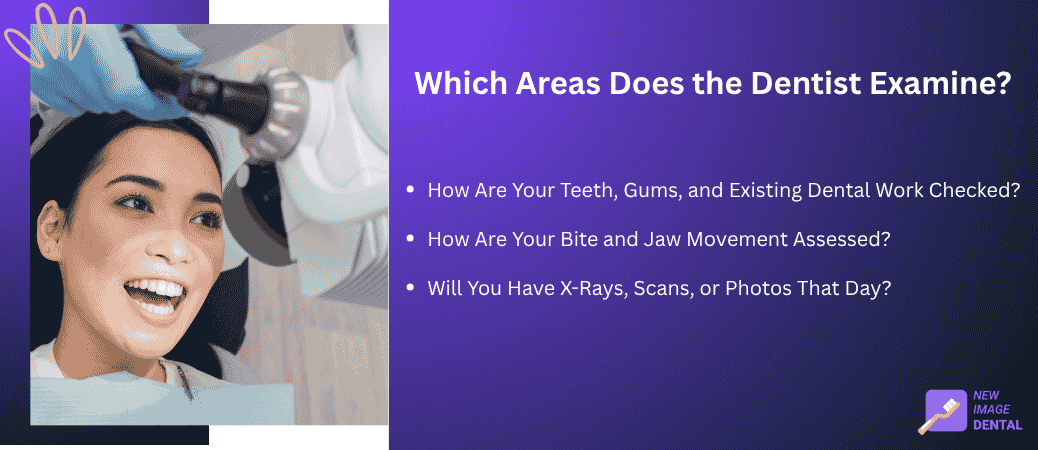
The exam looks at your whole mouth, not just the tooth that hurts. Your dentist checks for tooth decay, gum disease, and the condition of any existing dental crowns or dental bridges, then looks at how your bite comes together and whether your jaw moves comfortably.
How Are Your Teeth, Gums, and Existing Dental Work Checked?
Every tooth gets checked, along with your gums and any old fillings, crowns, or bridges already in your mouth. Your dentist looks for cracks, decay, and signs of periodontal disease, including gum recession or bleeding.
Gum pockets get measured to check for inflammation or infection below the gumline. This step catches problems that don’t hurt yet but could undermine any new restorative dentistry work down the road if left untreated.
How Are Your Bite and Jaw Movement Assessed?
A bite analysis shows how your upper and lower teeth meet and whether pressure is distributed evenly. Uneven bite alignment is a common, often overlooked cause of jaw pain, cracked teeth, and fillings that keep failing.
Your dentist will also watch how your jaw opens, closes, and shifts side to side, checking for clicking, soreness, or limited movement. A tooth can be restored perfectly and still fail early if the bite pressure around it never gets addressed.
Will You Have X-Rays, Scans, or Photos That Day?
Most consultations include digital x-rays taken the same day. These images show what’s happening below the gumline, like bone levels, hidden decay, or infection near the roots, all things a visual exam alone can’t catch.
Depending on your situation, your dentist might also take photos or a 3D scan to document your bite and tooth position.
These records give a far more complete picture than a quick look in your mouth ever could, which is part of why the exam at a routine dental check up looks so different from a full reconstruction workup.
When Will You Receive a Treatment Plan?
Some parts of your plan can be explained the same day, while others need more records or a specialist’s opinion first.
The scope of your case determines how much your dentist can tell you on the spot versus what comes in a follow-up conversation.
What Can the Dentist Explain at the First Appointment?
Your dentist can usually walk you through the general direction of treatment right after the exam. That might mean explaining whether you’re looking at dental crowns, dental bridges, dental implants, dentures, or some mix of restorative dentistry options.
They’ll also flag anything urgent, like active decay or infection that needs attention before bigger restorative work starts.
For a broader look at how these pieces typically fit together, the full mouth reconstruction procedure overview covers the common building blocks in more detail.
When Are Additional Records or Specialist Input Needed?
Complex cases often need a prosthodontist or periodontist to weigh in before a final plan is locked down.
If you’ve had significant bone loss, your dentist may need to evaluate whether bone grafting is necessary to support dental implants or implant-supported dentures.
Advanced periodontal therapy, extensive bite correction, or cases involving multiple failing restorations commonly call for this kind of added input.
It’s not a delay for its own sake. It’s there to make sure the plan holds up once treatment actually starts.
How Will You Compare Options and a Possible Timeline?
Your dentist should walk you through the realistic choices, not just one path. A more conservative plan might preserve more natural tooth structure but need more monitoring over time, while a more complete rebuild can offer more stability up front with a longer appointment schedule.
Timelines vary quite a bit by case. Straightforward reconstructions might wrap up in a few months, while cases involving implants and bone grafting can run 4 to 12 months or more from first visit to final restoration.
How Are Costs and Payment Options Discussed?
Cost conversations usually start with ranges and firm up once your exact plan takes shape. Full mouth reconstruction cost varies a lot between patients because the procedures involved differ so much from one mouth to the next.
When Will You Get an Itemized Estimate?
That range is wide because every case is different. Someone needing eight crowns is in a very different financial position than someone needing crowns, implants, and bone grafting across multiple areas of their mouth.
What Should You Ask About Insurance and Financing?

Ask directly what portion of your plan your dental insurance is likely to cover, since restorative work like crowns and bridges is sometimes partially covered while cosmetic add-ons usually aren’t.
It’s worth asking about phased treatment and financing options at this stage too.
Spreading treatment into stages can make the plan easier to manage financially, and you can learn more about available options through financing or by reviewing details about dental insurance before your visit.
How Can You Prepare for Your Appointment?
A little prep work helps your dentist get a clearer picture faster. Gathering records and writing down questions ahead of time means less gets missed once you’re in the chair.
What Records and Questions Should You Bring?
Bring a list of medications, past dental records, and any symptoms you’ve noticed, like morning jaw soreness or sensitivity while eating. If you wear a night guard or have a removable appliance that doesn’t fit well anymore, bring it along too.
Write down your questions in advance. It’s easy to forget them once you’re mid-exam, and nothing on this list is too small to ask about, including questions about root canal therapy, recovery time, or what a typical appointment day looks like.
What Should You Clarify Before Agreeing to a Plan?
Before signing off on anything, ask what’s essential now versus what can wait. Get clear on what each phase includes, how long it’s expected to take, and what your estimate does and doesn’t cover.
It also helps to ask about comfort options if you feel anxious about dental visits. Many practices can adjust pacing or explain sedation options, and if anxiety has kept you from the dentist for a while, overcoming dental phobia is worth a look before your appointment.
Leave with a Clear Next Step

A full mouth reconstruction consultation gives you a real starting point, not just a list of problems. You’ll walk out with an exam behind you, imaging on file, and a sense of what your dentist thinks your mouth needs.
Some answers come together that same day. Bigger cases, especially ones involving implants, bone grafting, or periodontal therapy, may need extra records or a specialist’s review before the full plan is locked in.
Either way, you should leave knowing what’s urgent, what can wait, and roughly what it’s going to cost.
Teams like New Image Dental build this first visit around listening before recommending, so you’re not handed a plan that doesn’t match your actual goals.
If you’ve been sitting with jaw pain, worn teeth, or a smile you’re avoiding in photos, a consultation is simply the next step, not a commitment to anything more.
Frequently Asked Questions
How long does a full mouth reconstruction consultation take?
Most consultations run longer than a routine checkup because they combine a detailed conversation with a full exam and imaging.
The exact length depends on how complex your case looks, but plan for more time than a standard cleaning appointment.
Will I get X-rays and a treatment plan on the same day?
Digital x-rays are usually taken the same day as part of the exam. A full, finalized treatment plan sometimes takes longer, especially if your dentist needs specialist input or additional records before confirming every detail.
Is the consultation painful?
The consultation itself is mostly conversation and examination, so it shouldn’t cause pain. If a specific tooth is sensitive or sore, let the team know beforehand so they can be gentle during that part of the exam.
Will I receive a cost estimate before deciding on treatment?
Yes, most practices provide an estimate once your exam and imaging are complete and your dentist knows which procedures your case needs. The estimate may be a range at first and get more specific as the final plan comes together.
Can I discuss financing at the consultation?
Yes, financing and payment timing are normal topics to bring up at this visit. Ask about phased treatment options, insurance coverage estimates, and any payment plans available before you commit to a full plan.