


Your jaw clicks when you yawn, chew, or open your mouth. You may also notice headaches that come and go, especially around your temples. If you have both symptoms, you may wonder if they are connected.
Jaw clicking and headaches from TMJ () can happen when the jaw joint or the muscles around it become irritated or strained.
A painless click does not always need treatment, but clicking with pain, stiffness, limited movement, or jaw locking should be checked by a dentist.
Learning what TMJ is and how it’s treated can help you understand what’s causing your symptoms and when to seek care.
TMJ symptoms can also include jaw pain, earaches, neck tension, and facial pain. Understanding what causes TMJ can help you know when to seek care and what treatment options may help.
Key Takeaways
- Clicking and headaches often share one cause: strain in the jaw joint and surrounding muscles.
- Grinding, clenching, stress, injury, and disc problems are the most common triggers.
- Pain, locking, or swelling means it’s time to call a dentist, since most cases improve with simple treatments.
Table of Content
- How TMJ Problems Can Cause Clicking and Headaches
- Symptoms That Point to a TMJ Disorder
- Common Causes and Flare-Up Triggers
- When to See a Dentist or Seek Urgent Care
- Diagnosis and Treatment Options for Lasting Relief
- Frequently Asked Questions
How TMJ Problems Can Cause Clicking and Headaches
Your jaw joint has a small disc inside it, and when that disc slips out of place, you often hear a click. The muscles that move your jaw also connect to your temples and neck, which is why jaw trouble can turn into head pain.
The Role of the Jaw Joint and Disc
The temporomandibular joint (TMJ) works like a sliding hinge that connects your jawbone to your skull. You have one on each side of your face, just in front of each ear.
Inside each joint, a small disc made of cartilage sits between the bones. It acts like a cushion and helps your jaw glide smoothly when you talk or chew.
With a temporomandibular disorder (TMD), that disc can wear down or shift out of position. This is called disc displacement, and it’s a common reason for jaw clicking or popping.
Each time the disc slides back onto the bone, you may hear a click. Arthritis, a blow to the jaw, or a strain in the ligaments around the joint can also change how the joint moves.
Why Jaw Movement Can Trigger Head Pain
The muscles that close your jaw don’t stop at your cheeks. One of them, the temporalis, fans out across your temple, which is exactly where many people feel a TMJ headache.
When you clench or grind your teeth, those muscles stay tense for hours. Tired, tight muscles get sore, and that soreness spreads.
That’s why TMD symptoms often show up together: pain around your jaw, ear, and temple, plus a headache and trouble opening your mouth fully.
TMJ headaches can feel a lot like tension headaches or even migraines, with throbbing pain and light sensitivity. Facial pain, neck stiffness, and aching around one ear are common partners.
When Painless Jaw Clicking Is Less Concerning
Not every click means something is wrong. Plenty of people have a jaw that pops now and then and never have a problem.
The key is whether pain or limited movement comes with it. If your jaw clicks but doesn’t hurt and opens normally, treatment usually isn’t needed.
Keep an eye out for changes, though. Pay closer attention if you notice:
- Pain or tenderness in the joint, especially in the morning
- Locking, or a jaw that catches when you open or close
- A grating sound instead of a clean click
- Headaches, earaches, or facial pain that keep coming back
- Trouble chewing foods you used to handle fine
A click that stays quiet and painless is usually just noise. A click that shows up with pain is worth mentioning at your next dental visit.
Symptoms That Point to a TMJ Disorder
A TMJ disorder rarely shows up as just one symptom. Most people notice a mix of jaw soreness, clicking sounds, stiff movement, and aching that spreads into the ears, neck, and shoulders.
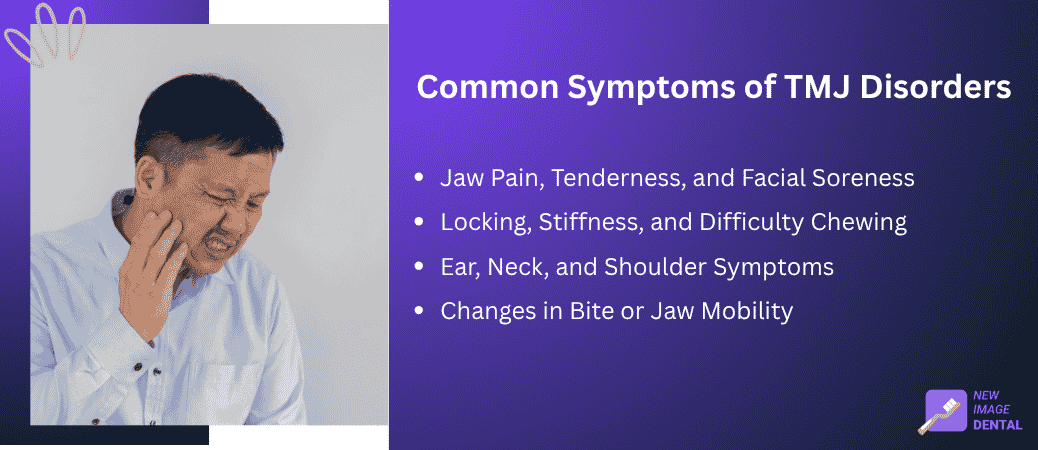
Jaw Pain, Tenderness, and Facial Soreness
The most common sign is a dull, aching pain right in front of your ear, where your jaw joint sits. It may hurt on one side or both.
You might also feel tenderness when you press on your cheeks or the muscles along your jawline. Some people wake up with a sore, tired face, especially if they clench or grind their teeth at night.
TMJ pain often comes with headaches near your temples, and it can even feel like a toothache.
In fact, tooth pain along with jaw tenderness is a recognized TMJ symptom, which is why some people visit the dentist thinking they have a cavity.
Eye pain and pain that spreads across your face are also possible.
Locking, Stiffness, and Difficulty Chewing
Clicking by itself usually isn’t a problem. It becomes one when your jaw starts to catch, stick, or lock.
Watch for these movement-related signs:
- Locking open: Your mouth gets stuck and won’t close smoothly
- Locking closed: You can’t open wide enough to bite a sandwich or yawn comfortably
- Morning stiffness: Your jaw feels tight and slow to loosen up
- Chewing fatigue: Your muscles tire out partway through a meal
Pain while chewing tough foods like steak, bagels, or raw vegetables is a common complaint. Jaw locking and popping that keeps coming back deserves a professional look.
Sudden locking, along with swelling, numbness, or fever, is a reason to get prompt medical care.
Ear, Neck, and Shoulder Symptoms
Your jaw joint sits very close to your ear canal, so TMJ problems often feel like ear problems.
You may notice earaches, a feeling of fullness, or tinnitus (ringing in the ears) with no infection to explain it. Many people see a doctor for an ear issue and learn the jaw is the real cause.
Neck and shoulder tension is another frequent complaint. When your jaw muscles stay tight, the muscles running down your neck and into your shoulders often tighten too.
That can lead to headaches at the base of your skull and sore, knotted shoulders. Because TMJ symptoms can mimic ear infections and migraines, a hands-on exam matters for getting the right answer.
Changes in Bite or Jaw Mobility
Pay attention if your teeth suddenly feel like they meet differently. Maybe one side hits first, or your bite feels “off” when you close your mouth.
Bite changes can happen when the small disc inside your jaw joint shifts out of place or when joint cartilage wears down.
Reduced mobility is another clue. Healthy adults can usually open about 40 to 50 millimeters; roughly three stacked fingers.
If you’re opening much less than that, or your jaw drifts to one side as it opens, the joint isn’t tracking properly.
You might also notice grating or grinding sounds instead of a clean click. That texture change often points to wear inside the joint rather than a simple disc slip.
Common Causes and Flare-Up Triggers
Jaw clicking and TMJ headaches usually come from a mix of things rather than one clear problem.
Grinding habits, stress-related muscle tension, past injuries, and joint wear all play a part, and each one can be managed differently once you know what’s going on.
Teeth Grinding and Daytime Clenching
Grinding and clenching your teeth is called bruxism, and it’s one of the most common reasons your jaw hurts.
Night-time grinding often shows up as morning soreness, dull temple headaches, or tired-feeling cheeks. Day-time clenching is sneakier.
You might catch your back teeth touching while you drive, answer emails, or scroll on your phone.
All that squeezing overworks the muscles that move your jaw and puts extra pressure on the joint disk. Over time, that can lead to clicking, tenderness, and flattened or chipped teeth.
Other repeated habits count too. Chewing gum all day, biting your nails, and even chewing on pens are all considered to be risk factors.
Stress, Anxiety, and Muscle Tension
Stress and anxiety don’t cause TMJ problems on their own, but they make almost everything about them worse.
When you’re tense, you tend to hold your jaw muscles tight without noticing. That constant low-level squeezing builds muscle tension in your temples, cheeks, and neck.
Poor sleep adds to it. If you’re not resting well, sore muscles have less time to recover, and your pain tolerance drops.
Common flare-up triggers to watch for:
- Busy or stressful weeks at work or school
- Long dental appointments with your mouth held open
- Eating tough or chewy foods like bagels, steak, and taffy
- Big yawns or singing loudly
- Cradling a phone between your shoulder and ear
- Poor sleep or a new sleep position
Injury, Posture, and Dental Factors
A direct hit to the jaw or face can damage the joint and its cartilage. Whiplash from a car crash can strain the muscles and ligaments around the joint as well, even without a blow to your face.
Posture matters more than most people expect. Forward head posture, common if you work at a desk or look down at a screen for hours, pulls on your neck and changes how your jaw rests.
That shift can leave your jaw muscles working overtime.
Dental factors can add stress too. A new crown or filling that sits slightly too high changes your bite, and holding your mouth wide open during long dental work can leave your joint sore for a few days.
Missing back teeth or an uneven bite can also push chewing forces to one side.
Arthritis and Joint Wear
Your temporomandibular joint can develop arthritis just like your knees or hips.
- TMJ osteoarthritis happens when cartilage in the joint wears down over the years. That’s when you may hear a grating or gravelly sound instead of a sharp click, along with stiffness that’s worse in the morning.
- Rheumatoid arthritis works differently. It’s an autoimmune condition that inflames the joint lining, and it can affect both jaw joints at once.
Other conditions can raise your risk of jaw pain, including fibromyalgia, ankylosing spondylitis, and certain connective tissue diseases. Smoking is linked to a higher risk as well.
TMJ problems are most likely to start between ages 20 and 40, though arthritis-related changes often show up later.
When to See a Dentist or Seek Urgent Care
Some jaw clicking fades on its own, but pain that sticks around, trouble opening your mouth, or headaches that keep coming back are worth having checked.
Knowing which symptoms can wait for a regular appointment and which ones need faster attention helps you get the right care sooner.
Signs You Should Schedule a TMJ Evaluation
Clicking by itself usually isn’t a problem. If your jaw clicks without pain or limited movement, you probably don’t need treatment.
Book a TMJ evaluation if you notice:
- Jaw pain or tenderness that lasts more than a few weeks
- Pain that gets worse when you chew, yawn, or talk
- Ear pain or a full feeling in your ear with no infection
- Morning headaches or a sore jaw from grinding your teeth
- A bite that suddenly feels off, or teeth that are wearing down
A dentist can often be your first stop for TMJ symptoms. They may fit a night guard, suggest jaw exercises, or refer you to a TMJ specialist for more testing.
TMJ Symptoms That Need Prompt Attention
A few signs shouldn’t wait. Reach out to a dentist or doctor right away if you have any of these red flags for TMJ symptoms:
| Symptom | Why it matters |
| Jaw locking open or closed | The disc may be stuck, and you may need help releasing it |
| Severe, sudden jaw pain | Could point to injury, infection, or joint damage |
| Swelling around the jaw or face | May signal infection or an abscess |
| Facial numbness or tingling | Suggests a nerve is involved |
| Fever with jaw pain | Often means infection |
| Ear drainage or hearing loss | Needs an ear exam, not just a jaw exam |
Also get checked if you can’t open your mouth wide enough to eat normally, or if pain started after a blow to the face.
At New Image Dental, our team can help evaluate jaw-related symptoms and discuss appropriate next steps.
Dr. Adams has completed continuing education in TMJ treatment, helping patients find appropriate ways to manage jaw discomfort and improve jaw function.
Other Conditions That Can Mimic TMJ Headaches
Not every headache near your temples comes from your jaw joint. Migraine is a common look-alike, since it can cause throbbing pain, light sensitivity, and nausea that TMJ pain usually doesn’t.
Other conditions worth ruling out include:
- Sinus infections, which cause pressure in the cheeks and upper teeth
- Ear infections, which bring ear pain, drainage, or muffled hearing
- Dental problems like a cracked tooth or abscess
- Trigeminal neuralgia, which causes sharp, electric-feeling facial pain
- Tension headaches from neck and shoulder muscle strain
- Arthritis, including rheumatoid arthritis and osteoarthritis, which can affect the joint
Because temporomandibular disorder shares symptoms with several of these, your provider may check your bite, feel the joint as you open and close, and order imaging before settling on a diagnosis.
Diagnosis and Treatment Options for Lasting Relief
Most jaw clicking and TMJ headaches get better with simple care, like rest, heat, and a soft diet. Your dentist or doctor will start with a hands-on exam, then move to imaging or stronger treatments only if your symptoms stick around.
What to Expect During a TMJ Examination
The first visit is usually quick and painless. Your dentist or doctor will listen to your jaw as you open and close, watch how far your jaw moves, and press around the joint and muscles to find sore spots.
Be ready to answer questions about when the pain started, whether you grind your teeth, and if the clicking hurts.
If something seems off, imaging may come next. Dental X-rays show your teeth and jaw, a CT scan gives a detailed look at the bones, and an MRI shows the disk and soft tissue.
Some offices also use ultrasound to view the joint. In certain cases, a thin camera called an arthroscope is placed in the joint space to look inside.
At-Home Steps to Reduce Jaw Strain
Home care does a lot of the work in early TMJ treatment. Start by giving your jaw a break.
- Eat soft foods and cut them into small pieces
- Skip chewing gum, ice, and tough or sticky snacks
- Use moist heat for dull, long-lasting aches and an ice pack for sharp, new pain, about 15 to 20 minutes at a time
- Chew with both sides of your mouth instead of one
- Rest your tongue on the roof of your mouth with teeth apart and jaw loose
Watch for stress habits, too. Clenching, nail biting, and leaning on your chin all add strain.
Stress management helps here. Relaxation techniques and breathing exercises can loosen tight jaw muscles, and biofeedback devices can show you when you are tensing up.
Medications, Oral Appliances, and Physical Therapy

Over-the-counter NSAIDs like ibuprofen can ease pain and swelling. If those are not enough, your provider may prescribe stronger anti-inflammatory medication, a short course of muscle relaxants for spasms, or low-dose tricyclic antidepressants to help with pain, grinding, and sleep.
Oral appliances are another common step. A night guard or oral splint fits over your teeth and can reduce pressure from grinding, though researchers still are not sure exactly why these devices help.
TMJ physical therapy rounds things out. A therapist can guide you through jaw exercises, use manual therapy on tight muscles, and add treatments like ultrasound or TENS.
Cognitive behavioral therapy and counseling can also help you spot and change habits that keep TMJ pain and headaches going.
When Injections or Joint Procedures May Be Considered
If months of conservative care do not help, your provider may suggest something more direct.
| Option | What it does |
| Corticosteroid injections | Reduce inflammation inside the joint |
| Botox injections | Rarely used, may relax overworked chewing muscles |
| Arthrocentesis (joint lavage) | Small needles flush fluid through the joint to clear out debris |
| TMJ arthroscopy | A thin scope and tiny tools treat the joint through a small opening |
| Modified condylotomy | Surgery on the jawbone to ease pain and locking |
| Open-joint surgery | Repairs or replaces the joint |
Open-joint surgery carries the most risk and is usually a last step, saved for clear structural problems.
Ask about the benefits, risks, and every alternative before you agree to any procedure.
Frequently Asked Questions
Jaw clicking, headaches, and ear pressure often show up together, and the reasons range from muscle tension to a shifted disc inside the joint.
Below are answers to the questions people ask most, plus clear signs that it’s time to book a dental visit.
What causes constant jaw clicking and headaches?
Your jaw joint sits just in front of each ear. Inside it, a small cushion of cartilage called a disc helps the bones glide smoothly.
When that disc slips out of place, you hear a click or pop as it moves back and forth. Ongoing jaw pain with clicking is most often linked to muscle tension, disc displacement, teeth grinding, stress, or early arthritis.
The headaches usually come from tired, overworked chewing muscles. Those muscles connect to your temples, so tightness there can feel like a dull band of pressure around your head.
Is jaw clicking always a sign of TMJ disorder?
No. Plenty of people have a jaw that clicks now and then with no pain and no trouble eating.
Clicking by itself is usually harmless. What matters more is whether the sound comes with pain, stiffness, or limited movement.
Jaw popping is a common symptom of TMD that is often temporary and improves with treatment. Many cases also get better with simple care and changes to daily habits, so clicking is not always permanent.
When should I see a dentist for jaw pain or clicking?
Make an appointment if any of these apply to you:
- Your jaw locks open or won’t open all the way
- Chewing hurts or you avoid certain foods
- Pain lasts more than two or three weeks
- Headaches keep coming back
- The clicking gets louder or the pain gets worse
- You notice swelling near the joint or a change in your bite
A dentist can check your bite, feel the joint as it moves, and look for worn tooth surfaces from grinding.
Can TMJ problems cause headaches, ear pain, or facial pain?
Yes, all three are common. People often describe a cluster of symptoms rather than one clear problem, including ear fullness, pressure, or pain along with temple headaches.
Because the joint sits so close to your ear canal, jaw trouble can feel a lot like an ear infection. A doctor may check for other causes first when diagnosing a TMJ headache.
Facial soreness usually shows up along the sides of your face and near your cheekbones. Tenderness in those muscles, plus jaw clicking or pain when chewing, points to TMD as a likely cause.
What treatments can help relieve TMJ clicking and discomfort?
Most people start with simple, low-risk steps. That often means resting your jaw, eating softer foods, and using heat or ice on the sore area.
Other common options include:
- Short-term pain relievers such as ibuprofen, when your provider says it’s okay
- Jaw exercises and physical therapy to improve movement and reduce muscle tightness
- A custom night guard to protect your teeth from grinding
- Stress management and habit changes, like keeping your teeth apart during the day
- Bite correction or orthodontics in some cases
Surgery is rare and usually saved for cases that don’t respond to anything else. Your dentist can walk you through the range of TMJ treatment choices and help you decide what fits.
Can stress or teeth grinding make jaw clicking worse?
Absolutely. Stress often leads to clenching, and clenching keeps your jaw muscles working when they should be resting.
Grinding your teeth at night adds hours of extra pressure on the joint. That’s why so many people wake up with a stiff, sore jaw or a morning headache.
Breaking the cycle helps. Better sleep habits, relaxation practices, and a night guard can all ease the load, and understanding how the jaw joint system works makes it easier to spot the habits worth changing.
Conclusion
Jaw clicking does not always mean something is wrong, but when it occurs with recurring headaches, pain, stiffness, or limited jaw movement, it deserves attention.
Jaw clicking and headaches from TMJ can have several causes, including grinding, muscle tension, joint changes, or an injury.
Paying attention to when your symptoms occur can help your dentist understand what may be contributing to them.
Simple changes and conservative treatments can often provide relief, while more involved care may be considered when symptoms continue.
If your jaw pain is getting worse or affecting eating, speaking, or daily activities, schedule an evaluation to find the right approach for your symptoms.