


When you look in the mirror and notice small chips, gaps, or stains on your teeth, you might wonder which cosmetic dentistry option can give you the smile you want.
Both dental bonding vs veneers can fix minor imperfections, but they work in different ways and suit different needs.
Dental bonding can replace veneers for minor smile corrections if you need a quick, affordable fix for small chips, gaps, or discoloration, though veneers offer longer-lasting results and better resistance to staining.
The right choice to improve your smile depends on your budget, how long you want the results to last, and the severity of the issues you want to correct.
Understanding the key differences between these two treatments will help you make a confident decision about which option fits your goals.
Your dentist can guide you through the process, but knowing what each treatment offers puts you in control of your smile journey.
Key Takeaways
- Dental bonding works well for minor cosmetic fixes and requires just one visit, while veneers provide more durable, stain-resistant results
- Bonding is more affordable and less invasive, but veneers last longer and handle moderate to severe discoloration better
- Your choice depends on your budget, timeline, and whether you need a temporary fix or a long-term solution
Table of Content
- Understanding Dental Bonding and Veneers
- Candidates and Best Uses for Each Treatment
- Comparing Outcomes: Aesthetics, Durability, and Stain Resistance
- Cost, Procedure Timeline, and Commitment
- Making the Right Choice for Minor Smile Corrections
- Frequently Asked Questions
Understanding Dental Bonding and Veneers
Both dental bonding and veneers fix cosmetic tooth problems, but they use different materials and techniques. Bonding applies resin directly to your tooth surface, while veneers are thin shells that cover the front of your teeth.
What Is Dental Bonding?
Dental bonding is a quick cosmetic dental treatment that fixes minor tooth problems in just one visit. Your dentist applies a tooth-colored composite resin directly to your tooth’s surface to fill in chips, cracks, or gaps.
The process is simple. Your dentist roughens your tooth slightly and applies a conditioning liquid. They then mold the tooth-colored resin to the right shape and use a special light to harden it. The whole procedure usually takes 30 to 60 minutes per tooth.
Cosmetic bonding removes almost no tooth enamel. This makes it a gentle option compared to other cosmetic dental treatments. You can use bonding to close small gaps, fix chips, cover stains, or reshape uneven teeth.
What Are Veneers?
Veneers are thin shells that dentists bond to the front of your teeth to improve their appearance. Most dental veneers are made from porcelain, though composite veneers are also available.
Porcelain veneers require multiple visits to complete. During your first appointment, your dentist removes a thin layer of enamel to make room for the veneer. They take impressions of your teeth and place temporary veneers.
The permanent porcelain veneers arrive in one to four weeks.
At your second visit, your dentist bonds the custom-made veneers to your teeth with special adhesive. Porcelain veneers look very natural because they mimic your tooth’s texture and translucency.
They resist stains better than natural teeth and can last many years with proper care.
How the Procedures Differ
The main difference is time and invasiveness. Bonding takes one visit and removes almost no enamel. Veneers need two to three appointments and require your dentist to remove more tooth structure.
Bonding works best for minor corrections like small chips or slight discoloration. Veneers can fix more significant problems like severe staining, larger gaps, or misshapen teeth.
Your dentist shapes the composite resin directly on your tooth during bonding. With veneers, a lab creates custom shells based on impressions of your teeth. This customization gives veneers a more polished, natural look.
Common Materials Used
Composite Resin is the material dentists use for bonding. This tooth-colored composite resin matches your natural tooth shade and bonds directly to your tooth surface. It’s the same material used in tooth fillings.
Porcelain is the most popular material for veneers. Porcelain veneers resist stains better than composite resin and look more like natural teeth. They reflect light similarly to tooth enamel.
Some patients choose composite veneers instead of porcelain. These use the same tooth-colored resin as bonding but are applied as a thin shell. Composite veneers cost less than porcelain but may not last as long or look as natural.
Candidates and Best Uses for Each Treatment
Both treatments work well for different dental needs and smile goals. Bonding handles quick fixes and minor issues, while veneers address more complex cosmetic concerns that need a lasting solution.
Ideal Situations for Dental Bonding
Teeth bonding works best when you need to fix small cosmetic problems quickly. This treatment is perfect for repairing minor chips on your front teeth, filling small gaps between teeth, or covering light stains that don’t respond to whitening.
You might choose bonding if you want to adjust the shape of slightly uneven teeth or make one tooth match the length of others.
The procedure requires minimal enamel removal, which makes it a good choice if you want to keep your natural tooth structure intact. Since bonding typically takes just one dental visit, it’s ideal when you need fast results before an important event like a wedding or job interview.
Budget-conscious patients often prefer bonding because it costs less than veneers. The treatment works well for younger patients who may want more permanent options later in life.
When to Choose Veneers
Custom veneers suit you better when dealing with multiple cosmetic issues at once or more noticeable damage. They effectively cover moderate to severe tooth discoloration that bonding can’t hide, including stains from medications or deep yellowing.
Veneers work well for larger gaps between teeth, more significant chips or cracks, and teeth with worn-down enamel. If you want a complete smile makeover that addresses several teeth at once, permanent veneers create a uniform appearance.
The treatment involves enamel preparation where your dentist removes a thin layer of tooth surface. You’ll wear temporary veneers while your permanent ones are being made in a dental lab. This process takes multiple visits over several weeks.
Key situations for veneers:
- Severe tooth discoloration resistant to whitening
- Multiple cosmetic concerns across several teeth
- Larger chips, cracks, or structural damage
- Desire for long-lasting results (10-15 years or more)
- Teeth with significant shape or alignment issues
Assessing Smile Goals with Your Dentist
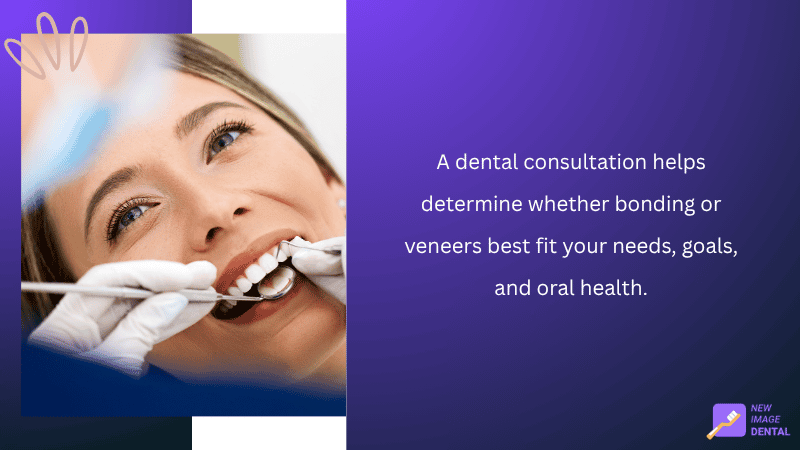
Your dentist evaluates your specific needs during a consultation to recommend the right treatment. They examine your teeth, discuss what bothers you about your smile, and explain which option matches your goals.
Be honest about your budget and timeline during this conversation. If you need quick fixes for one or two teeth, your dentist might suggest bonding.
For a more dramatic transformation involving multiple teeth, they may recommend veneers as a longer-term solution.
Your dentist also considers your oral health habits and lifestyle. They’ll ask about teeth grinding, contact sports, or habits that might affect how long each treatment lasts.
Some patients start with bonding to see how they like the results before committing to permanent veneers later.
Comparing Outcomes: Aesthetics, Durability, and Stain Resistance
When deciding between bonding and veneers for minor smile corrections, three factors matter most: how natural they look, how long they last, and whether they stay white over time.
Porcelain veneers typically outperform bonding in all three areas, but the gap narrows for small fixes.
Aesthetic Differences
Porcelain veneers deliver a more lifelike appearance than composite bonding. The ceramic material reflects light similarly to natural tooth enamel, creating depth and translucency that composite resin struggles to match.
Bonding works well for small chips or single-tooth repairs. Your dentist applies tooth-colored resin directly to your tooth and shapes it by hand in one visit. The results look natural for minor fixes, but the material lacks the glass-like shine of porcelain.
For a complete smile transformation, veneers provide better results. They’re custom-made in a lab to match your desired shape and shade. Bonding can appear slightly opaque or flat when placed on multiple front teeth, especially under bright lighting.
Durability and Longevity
Durability represents the biggest difference between these treatments. Composite bonding typically lasts 3-7 years with an average lifespan of 5 years. The material chips more easily when you bite hard foods or objects.
Porcelain veneers last significantly longer at 10-20+ years. Studies show that 95% of porcelain veneers survive 10 years with proper care. This extended lifespan makes veneers more cost-effective over time, despite higher upfront costs.
Bonding requires replacement every 5-7 years on average. Over 20 years, you might spend $1,600-2,000 per tooth on multiple bonding replacements. Veneers cost $900-2,500 initially but may only need one replacement in the same timeframe.
Stain Resistance and Maintenance
Composite resin is slightly porous, meaning it absorbs pigments from coffee, tea, red wine, and tobacco. Your bonding will likely show visible discoloration within 1-3 years if you consume staining beverages regularly.
Porcelain’s non-porous surface resists stains much better than composite bonding. The glass-like ceramic maintains its original color for years without yellowing or browning. You can drink coffee and wine without worrying about permanent staining.
Professional polishing helps bonding temporarily, but stains become more permanent as the material ages. Veneers respond well to professional cleanings throughout their entire lifespan.
This difference in stain resistance is one of the key advantages of veneers over bonding for patients who want long-term whiteness.
Achieving a Uniform Smile
Creating a uniform smile with bonding becomes challenging when treating multiple teeth. Each tooth gets hand-sculpted during your appointment, making it harder to achieve perfect symmetry and matching translucency across all treated teeth.
Veneers excel at creating uniformity. The lab fabricates all your veneers together, ensuring consistent color, shape, and translucency. This controlled process delivers predictable results for smile makeovers involving 6-8 front teeth.
One of the disadvantages of dental bonding is that color matching becomes more difficult as the material ages. Your bonded teeth may darken at different rates, creating an uneven appearance.
Veneers maintain their color consistently across all treated teeth, preserving your uniform smile for many years.
Cost, Procedure Timeline, and Commitment
Dental bonding costs $300-$600 per tooth and takes one appointment, while veneers cost $900-$2,500 per tooth and require two visits over 2-3 weeks.
The biggest difference isn’t just price, it’s that bonding requires no enamel removal, making it completely reversible.
Cost Comparison
Dental bonding typically costs $300-$600 per tooth, making it the more affordable option upfront. Veneers range from $900-$2,500 per tooth, which is three to four times more expensive.
But here’s what most people miss about the cost difference. Bonding needs replacement every 3-7 years, while veneers last 15-20 years. If you keep bonding for 20 years, you’ll need it replaced 3-4 times.
That means a single bonded tooth could cost $900-$2,400 over two decades, nearly the same as a veneer that lasts the entire time.
For one or two teeth, bonding is clearly cheaper. For multiple teeth or a long-term fix, veneers often provide better value when you calculate the total cost over time.
Treatment Time and Recovery
Bonding takes just one appointment. Your dentist applies composite resin directly to your tooth, shapes it, and hardens it with a special light. The whole process takes 30-60 minutes per tooth, and you can eat normally right away.
Veneers require two visits spread over 2-3 weeks. During the first visit, your dentist removes a thin layer of enamel (0.3-0.5mm) and takes impressions.
A lab makes your custom veneers while you wear temporary ones. At the second visit, your dentist bonds the permanent veneers to your teeth.
Neither treatment needs recovery time or healing. You won’t need to take time off work for either option.
Reversibility and Tooth Commitment
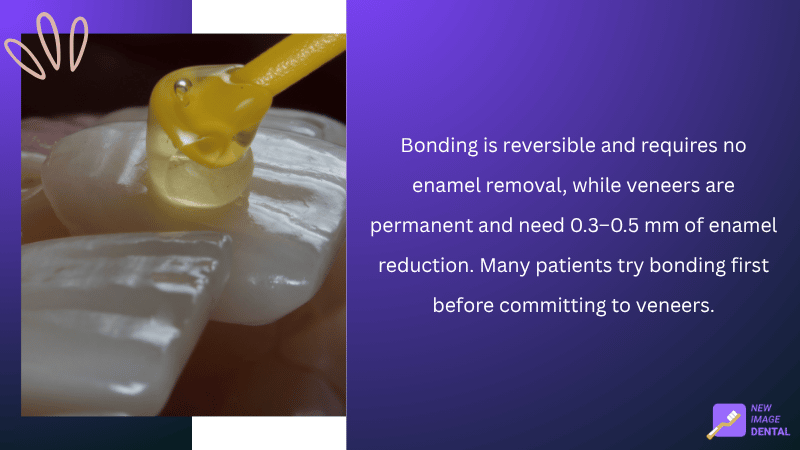
Bonding requires no enamel removal at all. Your dentist applies composite resin directly to your natural tooth surface without changing it. This makes bonding completely reversible, if you want to remove it later, your tooth stays intact.
Veneers require minimal enamel removal before placement. Your dentist shaves off about 0.3-0.5mm from the front of your tooth. This step is permanent.
Once you get veneers, you’ll always need something covering that tooth, whether it’s a replacement veneer or another restoration.
This is why many patients use bonding as a trial before committing to veneers. You can test how you like the new shape and color without permanently changing your teeth.
Making the Right Choice for Minor Smile Corrections
Choosing between bonding and veneers depends on your specific dental issues, budget, and long-term goals. Your dentist can help you evaluate which treatment matches your needs best.
Evaluating Your Smile Correction Needs
Start by identifying what you want to fix about your smile. Dental bonding works well for small chips and cracks, minor gaps between teeth, and light discoloration. It’s also good if you need to reshape a tooth slightly or fix just one or two problem areas.
Veneers handle bigger concerns better. They can cover moderate to severe staining that whitening can’t fix. They also work for larger chips, multiple teeth that need correction, or when you want a complete smile makeover.
Think about how long you want results to last. Bonding typically needs replacement every 3 to 10 years, while veneers can last 10 to 15 years or longer with proper care.
If you’re looking for a quick fix before a special event, bonding might be your best bet. For a permanent change, veneers offer more durability.
When to Consider Switching Treatments
You might start with one treatment and later decide the other fits better. Some people get bonding first because it’s less expensive and reversible. If the bonding wears down or you want something more permanent, you can switch to veneers later.
Bonding material can turn yellow over time from coffee, tea, or smoking. When this happens, you have two options: replace the bonding or upgrade to veneers, which resist stains better.
If your cosmetic goals change, switching makes sense. Maybe you initially fixed one tooth with bonding but now want your entire smile transformed. Your dentist can add veneers to create a uniform look across all visible teeth.
Consulting for Personalized Recommendations

Schedule a consultation with a dentist who specializes in cosmetic dental treatments. They’ll examine your teeth, take X-rays if needed, and discuss what you hope to achieve. Be honest about your budget and timeline.
Your dentist might suggest combining both treatments. For example, they could use bonding on back teeth and veneers on front teeth to balance cost with appearance.
This approach leverages the benefits of dental bonding while delivering the best results where it matters most.
Ask about maintenance requirements for each option. Veneers need regular dental check-ups but don’t require special care beyond normal brushing and flossing. Bonding requires avoiding hard foods and stain-causing drinks to keep it looking good longer.
Frequently Asked Questions
Patients often want to know how bonding stacks up against veneers for quick fixes, what problems each treatment solves best, and how to keep results looking good over time.
What’s the difference between dental bonding and porcelain veneers for small cosmetic fixes?
Dental bonding uses tooth-colored composite resin that your dentist applies directly to your tooth and shapes by hand. The resin is then hardened with a special light. Veneers are thin porcelain shells that are custom-made in a lab and bonded to the front of your teeth.
Bonding typically takes just one visit and costs less than veneers. Veneers require at least two appointments and come with a higher price tag.
The main trade-off is durability and appearance. Porcelain veneers resist stains better and have a shine that looks more like natural enamel.
For which minor smile issues is bonding usually a good option (like chips, gaps, or uneven edges)?
Bonding works well for chipped or cracked teeth, gaps between front teeth, and misshapen teeth. It can also lengthen short teeth or fix uneven edges. Your dentist can use bonding to cover discolored spots on individual teeth.
The procedure is best suited for minor cosmetic adjustments rather than major smile makeovers. Bonding can even fill small cavities without removing tooth structure.
If you have extensive damage or want to change the appearance of multiple teeth, veneers might be a better choice.
How long does dental bonding typically last compared with veneers?
Cosmetic bonding typically lasts between three to ten years depending on your oral hygiene habits and how you care for your teeth. Veneers usually last much longer, often 10 to 15 years or more.
The composite resin used in bonding isn’t as strong as porcelain. It can chip or separate from your tooth over time, though this happens less often than with crowns or fillings.
You may need touch-ups or replacements for bonded teeth as they wear down. Veneers need replacement eventually too, but not as frequently.
Will bonding look as natural as veneers in terms of color and shine?
Porcelain veneers offer a more natural, enamel-like sheen than bonding resin in most cases. They reflect light similarly to your natural teeth.
Your dentist will match the composite resin color to your existing teeth during bonding. The results look good at first, but the material doesn’t have the same translucent quality as porcelain.
Veneers also keep their brightness longer and resist stains better than bonding material. The difference might not be noticeable for small fixes on just one or two teeth.
How much tooth shaping is needed for bonding versus veneers?
Bonding requires little to no removal of your natural tooth structure. Your dentist simply roughens the surface slightly so the resin sticks properly.
Veneers are considered irreversible because a small amount of enamel is typically removed during preparation. This creates room for the porcelain shell and helps it fit properly.
The ability to preserve more of your natural tooth makes bonding a less invasive option. You can potentially switch to veneers later if you want to.
What kind of upkeep or lifestyle changes help bonding stay stain-free and durable?
You need to wait 24 hours after the procedure for the bonding to fully harden before eating normally. After that, the bonded areas are prone to staining just like your natural teeth.
Regular coffee drinkers and consumers of deeply-colored beverages may notice their dental bonds becoming stained gradually. Limiting these drinks or rinsing your mouth after consuming them helps.
You should avoid biting hard foods with bonded teeth and don’t use them to open packages or bite your nails. Good oral hygiene with regular brushing and flossing keeps bonding looking its best.