


You expected a natural smile, but your veneers look too white, too thick, or too perfect. They may seem flat, bulky, or out of place with your face. That can feel frustrating after spending time and money on cosmetic work.
You might be thinking why do my veneers may look fake? Your veneers look fake when the shade, shape, size, or material does not match your face, skin tone, and natural teeth.
Poor planning, low-quality materials, or rushed design often cause this problem. Veneers should blend in, not stand out for the wrong reasons.
The good news is that you can avoid these mistakes. When a dentist plans your case with care, checks your bite, and customizes every detail, veneers can look balanced and realistic.
Key Takeaways
- Veneers look fake when color, shape, and size do not match your natural features.
- Careful planning and quality materials create a more natural result.
- An experienced cosmetic dentist helps prevent and fix unnatural-looking veneers.
Table of Content
- What Actually Makes Veneers Look Fake?
- Common Planning and Design Pitfalls
- Choosing the Right Materials for Natural Results
- How Cosmetic Dentists Achieve Seamless Veneers
- Preventing and Fixing Fake-Looking Veneers
- Frequently Asked Questions
What Actually Makes Veneers Look Fake?
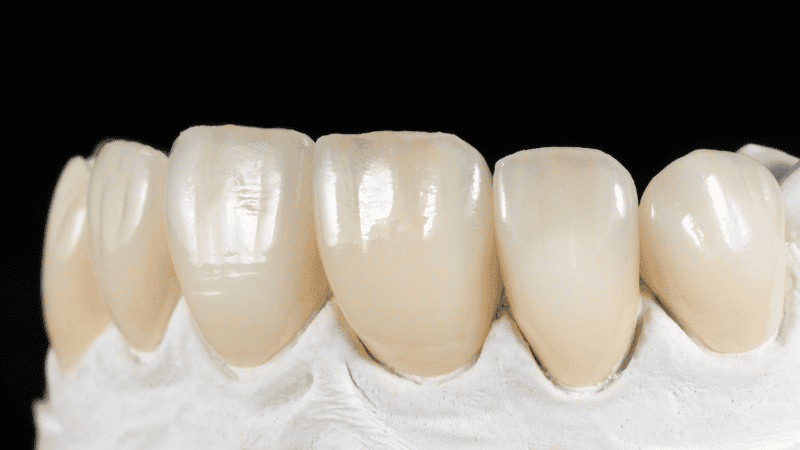
Veneers look fake for clear clinical reasons, not just because they are “too white.” Most problems come from poor shade matching, low translucency, excess thickness, or tooth shapes that ignore natural proportions.
Unnatural Color and Lack of Shade Matching
You may think bright white causes fake-looking veneers. In reality, poor shade matching creates the problem.
Your dentist should match the veneer color to your skin tone, eye color, and the whites of your eyes. Teeth that are much whiter than these features stand out in an unnatural way.
Many dentists explain that color alone rarely causes the issue, and that other factors matter more.
Shade matching also includes subtle color changes within each tooth. Natural teeth are slightly darker near the gum and lighter at the edge. If your veneers use one flat shade across every surface, they can look flat and artificial.
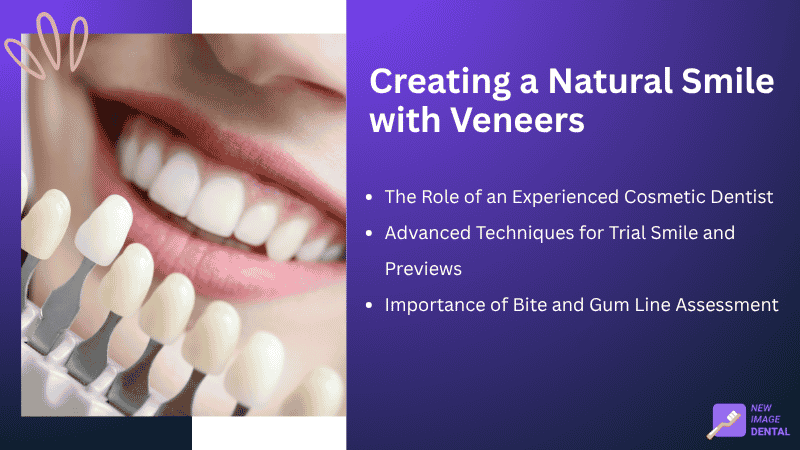
When you want to avoid fake-looking veneers, ask to see shade samples in natural light, not just under office lights.
Poor Translucency and Thickness
Natural enamel allows light to pass through it. This quality is called translucency.
If your veneers block light, they look solid and dull. Thick or overly opaque porcelain often causes this issue.
Dentists often mention that veneers that are too thick or bulky can look unnatural, along with being too white or poorly shaped.
Thickness often links to how much of your natural tooth the dentist removes. If too much enamel gets removed, the lab may need thicker material to hide the darker layer underneath.
Thicker veneers reduce translucency and create a “stuck on” look.
Ask how much enamel will be removed and what material will be used. Materials with better light transmission help veneers blend with your real teeth.
Identical Tooth Shapes and Proportions
Real teeth are not identical. Your two front teeth look similar, but they are not perfect copies. The side teeth are smaller and shaped differently.
When every veneer has the same width, length, and edge shape, you get a uniform row. Many dentists call this a “chiclet” look.
Proper tooth proportions matter. Your central incisors should lead the smile. The lateral incisors usually sit slightly shorter. Canines should keep a subtle point.
The number of veneers also affects proportion. You may not need 10 or 12 veneers if only 4 to 6 teeth show when you smile.
Treating only the teeth that need change helps your veneers blend with the rest of your natural smile.
Common Planning and Design Pitfalls
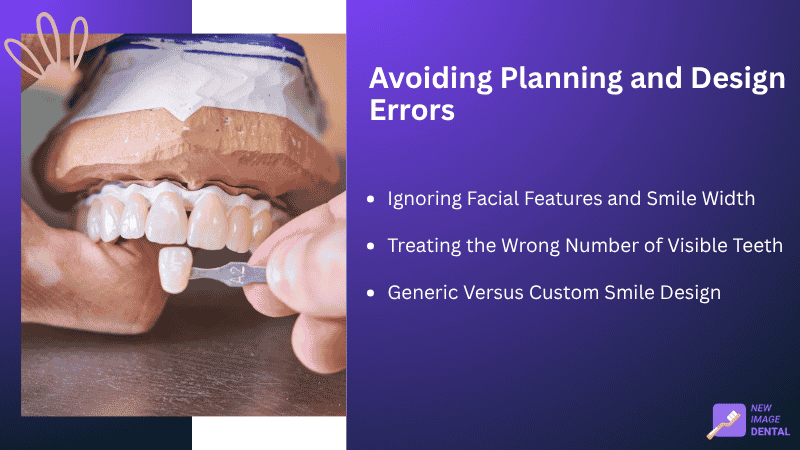
Small planning mistakes often cause veneers to look fake. When you ignore facial features, treat too many teeth, or use a generic smile design, the result can look flat or forced instead of natural.
Ignoring Facial Features and Smile Width
Your veneers should match your facial features, not a trend on social media. Tooth length, width, and shape must fit your face shape, lip line, and skin tone.
If your dentist makes your front teeth too wide for your face, your smile can look bulky. If they make them too long, your smile may look stiff when you talk.
A square face often supports wider teeth. An oval face usually looks better with softer, slightly narrower shapes.
Smile width also matters. Your veneers should blend with the teeth that show when you smile fully. If the front teeth look bright and perfect but the teeth beside them look dark or worn, the contrast draws attention.
A careful smile design uses photos, measurements, and often digital smile design tools to preview changes. You should see how the veneers will fit your face before any tooth is prepared.
Treating the Wrong Number of Visible Teeth
Many fake-looking results happen because too many teeth get treated. You may not need a full smile makeover to fix one or two concerns.
Start with a simple question: how many veneers do you actually need? Most people show 6 to 10 upper visible teeth when they smile. But that does not mean all of them need veneers.
If you only have a chipped central tooth and mild discoloration, placing 10 veneers can create an overly uniform look.
Large “package” cases often get promoted online, but clinical need should guide the plan.
Ask your dentist to point out exactly which visible teeth have real problems. Treat the teeth that need help. Leave healthy enamel alone when possible.
Generic Versus Custom Smile Design
Generic templates create identical teeth. Natural teeth are not identical.
If your dentist uses a one-size-fits-all mold, you risk the “chiclet” look. Teeth that are the same size, same shape, and same brightness across the front row often look artificial.
A custom smile design builds in small differences. Your two front teeth lead the smile. The teeth next to them should be slightly smaller. Canines should keep their natural contour and edge shape.
Modern planning may include digital smile design, wax-ups, and temporary mock-ups. These steps let you test the shape, length, and thickness before final bonding.
You should review the design in photos and in person. A natural smile fits your face, your bite, and your personality. Custom work takes more time, but it greatly lowers the risk of veneers that look fake.
Choosing the Right Materials for Natural Results
The material you choose plays a direct role in how real your smile looks. The right option affects color, light reflection, strength, and how long your dental veneers stay natural-looking.
Porcelain Versus Composite Veneers
When you compare porcelain veneers and composite veneers, you need to look at more than price.
Porcelain veneers are custom-made in a dental lab. A technician shapes and layers the material to match your teeth and facial features.
This careful process helps you get natural-looking veneers that blend with your smile instead of standing out.
Composite veneers are placed directly on your teeth in one visit. Your dentist sculpts the resin by hand. This option works well for small chips or minor gaps, but it depends heavily on the dentist’s skill.
In cosmetic dentistry, porcelain often provides more consistent and lifelike results for full smile changes. Composite works best for small corrections or short-term fixes.
Translucency and Longevity
Natural teeth are not flat white. They reflect light and show slight transparency near the edges.
High-quality porcelain veneers copy this effect. They allow light to pass through the surface, which creates depth. This translucency helps your veneers look like real enamel instead of solid plastic.
Composite veneers can look good at first. However, resin does not reflect light the same way porcelain does. Over time, composite can lose its shine and stain more easily.
Porcelain also tends to last longer with proper care. Many cases last 10–15 years or more. Composite veneers usually need repair or replacement sooner.
If your veneers look fake, the problem may be opacity.
Risks of Low-Quality or Outdated Materials
Not all dental veneers use the same grade of material. Lower-quality porcelain can look too thick or too bright. It may lack the subtle color shifts found in natural teeth.
Outdated materials often appear flat and overly white. They can create the “blocky” look that draws attention for the wrong reasons.
You should also think about how much enamel your dentist removes. Conservative preparation helps veneers sit naturally on your teeth.
This breakdown of factors that make veneers look natural highlights how ceramic choice and enamel preservation affect your outcome.
Ask your dentist what brand and type of material they use. Clear answers show careful planning.
In cosmetic dentistry, details like material quality and bonding technique make the difference between natural-looking veneers and a smile that feels artificial.
How Cosmetic Dentists Achieve Seamless Veneers
Seamless veneers do not happen by accident. Your cosmetic dentist plans each step, tests the design before final placement, and checks how your bite and gums frame your teeth.
The Role of an Experienced Cosmetic Dentist
An experienced cosmetic dentist looks beyond tooth color. You need someone who studies your face shape, lip movement, and smile line before designing your veneers.
They avoid the flat, overly white look that often causes fake-looking veneers. Instead of choosing one bright shade for every tooth, they blend tones.
Natural teeth have slight color changes from the gum line to the edge, and your veneers should reflect that.
A skilled dentist also works closely with a dental lab. According to guidance on what makes veneers look natural, details like translucency and surface texture matter just as much as shade.
These small design choices help your veneers reflect light like real enamel.
You should also review before-and-after cases. This shows whether the dentist consistently creates a natural smile instead of a uniform, artificial look.
Advanced Techniques for Trial Smile and Previews
You should never feel forced to guess what your final smile will look like. A careful cosmetic dentistry process includes a trial smile.
Your dentist may use digital smile design software to map your new tooth shape onto photos of your face. This gives you a visual preview before any permanent changes.
Next comes a temporary mock-up. You wear these trial veneers for several days. You can see how they look in natural light, at work, and in photos.
If something feels too long, too square, or too bright, your dentist adjusts it before final bonding.
Many experts explain in discussions about how to avoid fake-looking veneers that poor planning leads to obvious results. A trial phase helps you avoid that mistake. It gives you control and reduces regret.
Importance of Bite and Gum Line Assessment
Even perfectly shaped veneers can look fake if your bite or gums are off. Your dentist must check how your upper and lower teeth meet.
If veneers are too bulky, they can push your lips forward. If they are too long, they may hit your lower teeth when you speak. Both problems make your smile look unnatural.
Your gum line also plays a major role. Uneven gums can make teeth look different sizes, even if the veneers match. In some cases, minor gum recontouring creates better balance.
You want veneers that fit your mouth, not just your teeth. Careful bite and gum line assessment helps your veneers blend in so they look like they have always been yours.
Preventing and Fixing Fake-Looking Veneers
You can lower the risk of fake-looking veneers by protecting the surface, keeping your bite stable, and choosing careful adjustments instead of quick fixes. If your veneers already look unnatural, you still have clear options to improve them.
Good Maintenance and Aftercare

You protect your dental veneers the same way you protect natural teeth. Brush twice a day with a soft brush and non-abrasive toothpaste. Abrasive pastes can scratch porcelain and dull the shine, which makes veneers look flat.
Floss every day. Plaque near the gumline can cause swelling, and swollen gums make even well-shaped veneers look bulky.
If you grind your teeth, wear a custom night guard. Grinding can chip porcelain veneers or wear down composite veneers, which changes their shape and makes them look uneven.
Avoid using your teeth to open packages or bite hard objects. Small chips along the edges often catch light in the wrong way and draw attention.
See your dentist every six months. Professional polishing keeps the surface smooth and helps you avoid fake-looking veneers caused by stains, rough edges, or gum changes.
What to Do If You’re Unhappy With Your Veneers
Start with a clear evaluation. Ask your dentist to check the shape, length, color, and bite. Many fake-looking veneers result from teeth that are too uniform or too bulky.
If the issue is minor, your dentist may reshape or polish the veneers. Small contour changes can soften sharp edges or reduce thickness.
If color looks flat or opaque, replacement may be the only fix. In that case, ask about material choice.
For major problems, seek a second opinion from a cosmetic dentist who focuses on proportion and bite. A careful redesign, mock-up, and trial phase help you avoid fake-looking veneers the second time.
Frequently Asked Questions
Veneers can look natural when your dentist plans the size, shade, and shape around your face and bite. Problems usually happen when teeth look too white, too thick, or poorly matched to your features.
What are the most common reasons veneers end up looking unnatural?
Veneers often look fake when they are too white for your skin tone or too opaque to reflect light like natural enamel. Teeth that all look the same shape and size can also stand out in a bad way.
They may also look bulky if your dentist does not remove enough enamel before placing them. Rushed planning and using a standard template instead of a custom design can cause these issues.
Many cosmetic dentists explain that poor shade matching and wrong proportions lead to obvious results.
How can I avoid veneers that look too white, thick, or “bulky”?
Start with a detailed consultation. Your dentist should check your skin tone, lip movement, and bite before choosing a shade or shape.
Ask to see shade samples in natural light. High-translucency porcelain often looks more realistic because it reflects light more like real teeth.
Make sure your dentist removes the right amount of enamel so the veneers do not sit too far forward. Proper tooth preparation keeps them from looking thick.
What questions should I ask my dentist to make sure my veneers look natural?
Ask what material they plan to use and why. Porcelain usually resists stains better and can mimic natural enamel more closely than composite.
Ask how they choose the shape and shade. You can also ask if they offer a mock-up or preview so you can see the expected result before final placement.
Find out how many veneer cases they complete each year. Experience in cosmetic cases often improves the final look.
What is the 4-8-10 rule for veneers, and how does it affect the final look?
The 4-8-10 rule refers to how many upper front teeth you treat to keep your smile balanced. Four veneers cover only the central teeth. Eight or ten include more teeth toward the back.
If you treat too few teeth, the veneered teeth may look brighter than the untreated ones beside them. Treating more teeth can create a smoother color transition and a more even smile.
Your dentist should explain how many teeth you need based on how wide your smile appears when you talk and laugh.
Can the wrong shape or size of veneers make my smile look fake, and how is that prevented?
Yes, the wrong shape or size can make your teeth look flat or oversized. Teeth that are too long or too square may not match your face.
Your dentist should design each veneer to fit your bite and natural wear patterns. Custom shaping and careful proportion planning help prevent a uniform, “blocky” look.
Digital imaging and wax models can also help you preview the shape before final bonding.
Why do some dentists advise against veneers, and what safer alternatives might look more natural?
Some dentists advise caution because veneers require removing a thin layer of enamel. This change is permanent.
If your teeth are mostly healthy, options like whitening, orthodontics, or bonding may improve your smile with less tooth reduction. Composite bonding can fix small chips or gaps in one visit, though it may stain or wear faster than porcelain.
A careful exam helps you decide if veneers are the right choice or if a more conservative treatment will meet your goals.