


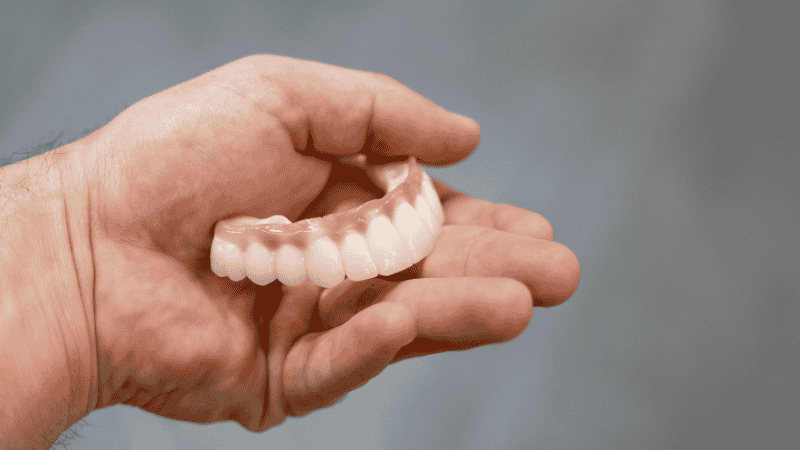
When your dentures start feeling loose or uncomfortable, you face an important choice, denture reline vs new dentures.
A denture reline can restore proper fit if your dentures are still in good condition, while new dentures become necessary when the existing set is damaged, worn, or can no longer be adjusted to fit properly.
Understanding the difference between these options will save you time and money.
Your mouth changes naturally over time. After teeth are removed, your gums and jawbone reshape themselves. This means dentures that once fit perfectly can become loose months or years later.
You might notice clicking sounds when you talk, difficulty chewing food, or sore spots on your gums.
The good news is that you have options. A denture reline reshapes the underside of your existing dentures to match your current gum shape.
This process costs less than buying new dentures and can extend the life of your current set. However, if your dentures are cracked, stained, or heavily worn, replacement might be the better choice for long-term comfort and function.
Key Takeaways
- A reline adjusts your existing dentures to fit your changed gum shape while replacement is needed for damaged or worn dentures
- Regular dental checkups help catch fit problems early before they cause pain or damage to your gums
- Both soft and hard reline options exist with different costs and longevity depending on your needs
Table of Content
- Understanding Changes in Denture Fit
- Identifying the Right Solution for Poor Fit
- Types of Denture Relining Procedures
- Denture Care, Maintenance, and Fit Longevity
- Alternatives and Next Steps for Better Fit
- Frequently Asked Questions
Understanding Changes in Denture Fit
Your mouth changes over time, and these natural shifts directly affect how your dentures fit. Bone loss in your jaw is the primary reason dentures feel loose, but other factors like gum tissue changes and everyday wear can also play a role.
How Bone and Gum Changes Affect Dentures
When you lose your natural teeth, your jawbone no longer receives the stimulation it needs from tooth roots. This causes the bone to gradually shrink and reshape itself.
As bone resorption occurs, the ridge that supports your dentures becomes smaller and flatter.
Your gum tissue also changes as the bone beneath it shrinks. The gums may become thinner or change shape to match the new bone structure. This creates gaps between your dentures and your gums, making them unstable.
Lower dentures are particularly affected by these changes. The lower jaw typically has less bone surface area to begin with, so even small amounts of bone loss can make your lower denture wobble or shift.
These changes happen gradually, which is why you might not notice your dentures getting looser until the fit becomes quite poor.
Common Reasons Dentures Become Loose
Ill-fitting dentures develop for several reasons beyond bone loss. Your remaining natural teeth (if you have partial dentures) may shift position over time, changing how your denture sits in your mouth.
Poor care can also cause problems. Dentures that are cleaned with boiling water or left to dry out can warp and change shape. Dropping your dentures or storing them incorrectly damages them and affects their fit.
Normal wear and tear gradually changes the denture surface. The materials break down slightly over time from daily use, cleaning, and contact with saliva.
Even a small change in shape can cause gum irritation or make your dentures feel unstable.
Weight changes in your body can also affect your mouth tissues, making previously comfortable dentures feel different.
The Impact of Aging and Bone Resorption
Aging speeds up the natural process of bone loss in your jaw. Most people experience the fastest bone loss during the first year after tooth extraction, but the process continues throughout your life.
Bone resorption happens at different rates for different people. Factors that affect the speed include your age, overall health, nutrition, and how long you’ve been without teeth. Women after menopause often experience faster bone loss due to hormonal changes.
As bone continues to disappear, complete dentures that once fit perfectly begin to slip and move. This movement can cause sore gums and create painful pressure points where the denture rubs against soft tissue.
The impact becomes more noticeable over time. Dentures typically need relining every 1 to 2 years as your mouth continues to change.
Without proper adjustments, loose dentures can make eating difficult and affect your ability to speak clearly.
Identifying the Right Solution for Poor Fit
Knowing whether you need a simple adjustment, a reline, or completely new dentures depends on specific symptoms you’re experiencing and how old your current dentures are.
The right choice can save you money and restore comfort quickly.
Signs and Symptoms of Ill-Fitting Dentures
You’ll notice several clear warning signs when your dentures stop fitting properly. Loose or slipping dentures are one of the most common complaints, making it hard to eat or speak confidently.
Sore spots and red, irritated gums often develop when dentures rub against tissue incorrectly. You might also experience clicking sounds when you talk or chew.
Difficulty eating certain foods is another red flag. If you find yourself avoiding harder textures or cutting food into smaller pieces than before, your fit has likely changed.
Changes in your speech, like slurring or whistling sounds, can happen when dentures shift position. Some people notice food particles getting trapped under their dentures more frequently, which causes discomfort and bad breath.
Common symptoms include:
- Dentures that move when you laugh or cough
- Pain when chewing
- Increased saliva production
- Changes in facial appearance or sagging
When a Denture Reline Is Appropriate
A denture reline works well when your dentures are still in good structural condition but don’t fit snugly anymore. This procedure adds new material to the base of your denture to match your current gum shape.
Your dentist will likely recommend a reline if your gums have changed due to bone recession but the denture teeth are still properly aligned.
Most dentures need relining every 1 to 2 years as your mouth naturally changes shape.
There are three types of relines available. A soft reline uses gentle material for tender gums. A hard reline lasts longer and provides more durability. A temporary reline helps while inflamed gums heal.
Relines cost much less than new dentures and can extend the life of your current set by several years.
They’re ideal when your dentures are less than 5 years old and haven’t been damaged or worn down significantly.
When a New Denture Might Be Needed
You’ll need new dentures when your current set is more than 5 to 7 years old or has structural damage. Cracks, chips, or broken teeth can’t always be repaired effectively.
If your dentures have been relined multiple times already, the base may be too thick to reline again safely. Worn-down teeth that have lost their chewing surfaces need replacement rather than adjustment.
Significant bone loss in your jaw sometimes creates a situation where no amount of relining will help. Your facial structure may have changed so much that the denture no longer supports your cheeks and lips properly.
Warped or discolored dentures that have changed shape from improper care usually can’t be fixed.
If your bite feels completely wrong or you’ve experienced major weight changes, starting fresh with new dentures often makes more sense than trying to salvage old ones.
Types of Denture Relining Procedures
Your dentist can choose from three main types of denture relines, each designed for different situations and comfort needs.
The material used and the timing of your reline procedure depend on the condition of your gums and how long it’s been since your last adjustment.
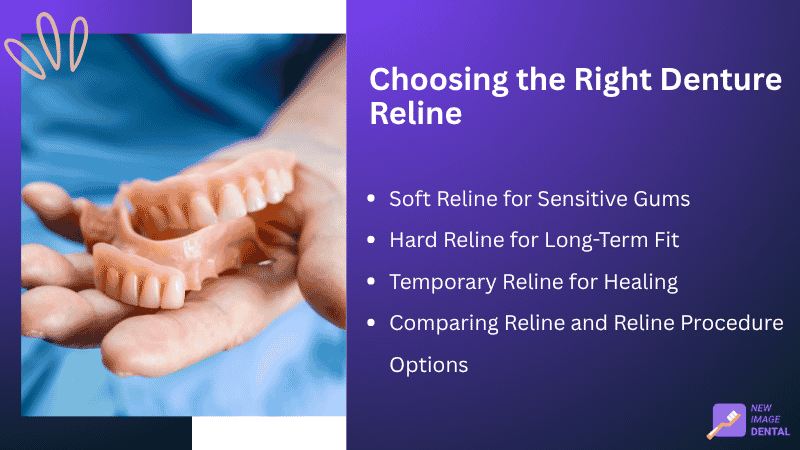
Soft Reline for Sensitive Gums
A soft reline uses pliable material to cushion the underside of your denture. This option works well if you have tender or irritated gums that need extra protection.
Your dentist removes your denture and applies the soft lining material directly to the areas that touch your gum tissue.
The soft material helps sore gums heal while you continue wearing your dentures. Many dentists prefer this method for patients with sensitive gums because it provides immediate comfort.
You can usually leave the office wearing your relined dentures the same day. The soft material typically lasts one to two years before you need another adjustment.
This shorter lifespan is the trade-off for the extra comfort it provides.
Hard Reline for Long-Term Fit
A hard reline involves removing some plastic from inside your denture and replacing it with a putty-like substance. Your dentist places the denture back in your mouth and lets it sit for several minutes to create an impression.
The denture then goes to a dental lab where technicians apply permanent hard acrylic to the underside.
This type of denture relining offers the most durable solution. A hard reline can last over two years, and some dentists recommend getting one every two years to maintain good oral health.
You’ll need to return to the dentist after one to two days to pick up your dentures from the lab. The wait is worth it because you get a precise fit that lasts longer than other options.
Temporary Reline for Healing
A temporary reline helps when your gums have become sore and inflamed from waiting too long between adjustments. Your dentist removes your dentures and applies medicated material to the underside.
This treatment lets your gums recover before getting a permanent solution.
You’ll wear the treated denture for two to four weeks. After your gums heal, you can decide whether to get new dentures or proceed with a soft or hard reline.
This gives your mouth time to return to a healthy state before making a long-term decision.
Temporary relines serve as a bridge between poor-fitting dentures and a proper solution.
Comparing Reline and Reline Procedure Options
Here’s how the three types of denture relines compare:
| Reline Type | Best For | Duration | Appointment Time |
| Soft | Sensitive or tender gums | 1-2 years | Same day completion |
| Hard | Long-term durability | 2+ years | Requires lab work (1-2 days) |
| Temporary | Inflamed gums needing healing | 2-4 weeks | Same day, then follow-up |
The cost to reline dentures ranges from $400 to $600 at most dental offices. Hard reline costs tend to be higher than soft relines because of the lab work involved.
DIY reline kits cost less than $30 but may not provide the same quality fit as professional work.
Your dentist will examine your mouth and recommend which type fits your needs best. The right choice depends on your gum health, how long since your last reline, and whether you need immediate relief or long-term stability.
Denture Care, Maintenance, and Fit Longevity
Taking care of your dentures properly can extend how long they fit well and function correctly.
Regular dental cleaning, smart use of adhesives, and knowing when to seek professional help all play important roles in keeping your dentures comfortable and secure.
Best Practices for Daily Denture Care
You should remove and rinse your dentures after every meal to wash away food particles and debris. Use a soft-bristled denture brush with mild soap or denture cleaner to gently scrub all surfaces at least once daily.
Never use regular toothpaste because it’s too abrasive and can scratch your dentures. These tiny scratches create places where bacteria can grow.
Soak your dentures overnight in water or a denture cleaning solution. This keeps them moist and prevents warping. Your gums also need a break from wearing dentures, so remove them for at least four to six hours each day, usually at night.
Handle your dentures over a folded towel or basin of water. They can break easily if dropped on hard surfaces.
Clean your mouth, gums, and tongue with a soft toothbrush each day to remove plaque and stimulate circulation.
Role of Denture Adhesive and Its Limitations
Denture adhesive can help improve stability for dentures that fit relatively well but need a little extra hold. It’s not a permanent fix for loose or ill-fitting dentures that have lost their proper fit.
If you find yourself using adhesive daily just to keep your dentures in place, this signals that you likely need adjustments or a reline. Adhesive should be a minor aid, not a necessity.
Apply only a small amount of adhesive in thin strips or dots. Too much can cause the denture to slip around or ooze out when you bite down. Clean off old adhesive completely each day before applying new product.
Remember that adhesive won’t fix dentures that rock, tip, or cause sore spots. These problems require professional denture adjustment or repair.
Professional Care vs. At-Home Solutions
Visit your dentist at least once a year for a denture checkup even if nothing feels wrong. Your dentist can spot problems early and perform minor adjustments before they become bigger issues.
You can handle simple cleaning and daily maintenance at home. But repairs like cracks, chips, or broken teeth need professional denture repair services.
Trying to fix these yourself with household glue can damage your dentures permanently and harm your mouth.
Professional cleanings remove stubborn stains and buildup that home care can’t address. Your dentist will also check how your gums and jaw have changed over time.
Most dentists recommend a reline every one to two years to maintain proper fit. This timeline varies based on how quickly your bone and gum tissue change.
Alternatives and Next Steps for Better Fit
If a reline isn’t enough or your dentures are beyond repair, you have several options to explore. Understanding costs, specialists, and modern alternatives can help you make the best choice for your mouth and budget.
Implant-Supported Dentures and Dental Implants

Implant-supported dentures offer a more stable solution than traditional removable dentures. These dentures attach to dental implants that are surgically placed into your jawbone.
The implants act like tooth roots and prevent bone loss over time.
You can choose between different types of implant dentures. Some snap on and off for cleaning, while others are permanently fixed in place. The implants provide a secure fit that won’t slip when you eat or talk.
Dental implants are more expensive than regular dentures but last much longer. They also feel more natural and don’t require adhesives.
Your dentist can explain if you have enough bone density for implants or if you need a bone graft first.
When to See a Prosthodontist
A prosthodontist is a dentist who specializes in replacing missing teeth and fitting dentures. You should consider seeing one if your regular dentist can’t solve your fit problems or if you have complex dental needs.
These specialists have extra training in making dentures fit properly. They use advanced techniques to create custom solutions for difficult cases.
If you’ve had multiple failed denture fittings, a prosthodontist might be your answer.
Your insurance may require a referral from your regular dentist. Prosthodontists often handle cases involving implant-supported dentures or full mouth reconstruction procedure.
Cost Considerations for Relines and New Dentures
A denture reline typically costs between $300 and $500, depending on whether you need a soft or hard reline. This is much cheaper than buying new dentures.
New dentures usually range from $600 to $8,000 per arch. The price depends on the materials used and complexity of your case.
Basic acrylic dentures cost less than premium dentures with better aesthetics and durability.
Dental insurance often covers part of denture costs but may only pay for new ones every five to seven years. Check your policy to see what’s covered. Some plans cover relines more frequently than full replacements.
How to Find Affordable Denture Solutions
Many dental schools offer discounted denture services performed by students under supervision. The work takes longer but costs significantly less than private practices.
Look for affordable dentures through community health centers or dental discount plans. These plans aren’t insurance but give you reduced rates at participating dentists.
Some offer payment plans that let you spread costs over several months.
Ask your dentist about different material options. You don’t always need the most expensive dentures to get a good fit. Sometimes mid-range options work just as well for your needs and budget.
Frequently Asked Questions
Dentures can feel loose when your jawbone shrinks or your gums change shape over time. A reline adds material to help them fit again, while replacement means getting completely new dentures.
Why do my dentures suddenly feel loose or move when I talk or eat?
Your dentures feel loose because bone recession causes your gums to shrink after you lose your natural teeth. Without tooth roots to stimulate your jawbone, the bone slowly reabsorbs over time.
This changes the shape of your mouth and creates gaps between your dentures and gums.
Your remaining natural teeth can also shift position, which affects how partial dentures fit. Sometimes dentures warp or change shape if you clean them with boiling water or don’t store them properly.
How can I tell if I need a denture reline versus a full replacement?
You need a reline when your dentures are still in good condition but just don’t fit snugly anymore. A denture reline adds a new layer of material to the base so it follows the current contours of your mouth.
You need new dentures when the teeth are worn down, the denture base is cracked or damaged, or the bite alignment has changed significantly.
Your dentist can examine your dentures and tell you which option is best for your situation.
What are the signs that my gums or jawbone have changed under my dentures?
You’ll notice clicking sounds when you chew or speak if your jawbone has changed. Your dentures may slip forward or sideways when you eat or talk.
You might develop sore spots or irritation on your gums where the dentures rub. Food particles get trapped under your dentures more easily than before.
Your face may look different or sunken because the dentures no longer support your facial muscles properly.
Can I fix a loose denture at home, or should I see a dentist right away?
You should see your dentist right away instead of trying to fix loose dentures at home. Never use household glue or try to adjust your dentures yourself because you can damage them permanently.
You can use denture adhesive as a temporary solution while you wait for your dental appointment. Denture adhesive helps poorly fitting dentures feel more secure and keeps food particles from getting underneath.
This is only a short-term fix and doesn’t correct the underlying fit problem.
How long does a denture reline usually last, and how often is it needed?
Most dentures need relining every 1 to 2 years, but this depends on how quickly your bone and gums change. Some people need relines more often if their bone loss happens faster.
Hard relines last longer than soft relines because they use more durable materials. Your dentist will check your dentures at regular appointments and let you know when it’s time for a reline.
What happens during a denture reline appointment, and will it be uncomfortable?
Your dentist examines your dentures and mouth to determine which type of reline you need. A soft reline works best for patients with tender gums, while a hard reline is more durable but takes longer to complete.
The dentist adds new material to the base of your denture so it matches your current gum shape. A temporary reline may be done first if your gums are sore and inflamed, giving them time to heal.
The procedure itself is not uncomfortable, and you’ll leave with dentures that fit much better than before.