


Your smile does more than help you look good. It affects how you eat, speak, and feel every day. When serious dental problems damage most or all of your teeth, small fixes may not be enough to restore normal function.
Full mouth reconstruction procedure becomes medically necessary when severe tooth decay, trauma, gum disease, or bite problems affect your ability to chew food properly, cause chronic pain, or threaten your overall oral health.
Unlike cosmetic procedures that focus only on appearance, full mouth restoration addresses critical functional and structural issues throughout your mouth.
This type of oral rehabilitation combines multiple dental treatments to rebuild damaged teeth, repair your bite, and restore comfort.
You might need this treatment if you have multiple missing teeth, severe wear on your tooth surfaces, or jaw pain that won’t go away.
Understanding when full mouth reconstruction is necessary helps you make informed decisions about your dental health and quality of life.
Key Takeaways
- Full mouth reconstruction repairs severe dental damage that affects your ability to eat, speak, and live without pain
- Treatment combines multiple procedures like implants, crowns, and bridges to restore both function and appearance
- Costs range widely based on complexity, and some procedures may be covered by insurance if medically necessary
Table of Content
- Understanding Full Mouth Reconstruction
- Signs and Conditions Requiring Medical Reconstruction
- Comprehensive Evaluation and Treatment Planning
- Common Dental Procedures and Technologies Used
- Cost, Insurance, and Long-Term Maintenance
- Frequently Asked Questions
Understanding Full Mouth Reconstruction
Full mouth reconstruction procedures combine multiple dental treatments to restore your teeth, gums, and bite when damage affects most or all of your mouth. This approach prioritizes health and function while also improving how your smile looks.
Definition and Scope
Full mouth reconstruction, also called full mouth rehabilitation, is a customized treatment plan that repairs or replaces teeth throughout your entire mouth. This type of restorative dentistry addresses serious problems that affect many teeth at once.
Your dentist will create a comprehensive dental treatment plan that may include crowns, bridges, dental implants, veneers, and orthodontics. The process can also involve gum treatments, jaw alignment correction, and bite adjustments.
Prosthodontics specialists focus on restoring and replacing teeth using these advanced techniques. Each plan is unique because it depends on your specific oral health needs and goals.
Full mouth reconstruction addresses multiple dental issues present at the same time rather than treating each problem separately over many years.
Difference From Smile Makeover and Cosmetic Dentistry
Full mouth reconstruction focuses on restoring function and health first. A smile makeover centers mainly on cosmetic improvements like whitening, reshaping, or enhancing appearance.
You may need reconstruction when severe decay, trauma, or disease damages your ability to chew and speak properly. Cosmetic dentistry typically addresses minor flaws in otherwise healthy teeth.
Reconstruction is usually necessary to fix medical problems. Smile makeovers are often elective procedures you choose for aesthetic reasons.
Your treatment may combine both functional and cosmetic steps, but the priority remains correcting damage that affects your daily life and long-term oral health.
Key Goals and Benefits
The main goals include restoring proper chewing function, eliminating pain, and preventing further damage to your teeth and jaw. You’ll also see improvements in speech clarity and facial support.
Key benefits include:
- Better ability to eat a wider variety of foods
- Relief from chronic jaw pain and headaches
- Protection of remaining natural teeth
- Improved oral hygiene due to properly aligned teeth
- Enhanced confidence when smiling and speaking
Treatment helps prevent bone loss in your jaw and stops the shifting of remaining teeth. You’ll find daily activities like eating and talking become easier and more comfortable.
Signs and Conditions Requiring Medical Reconstruction
Full mouth reconstruction becomes medically necessary when extensive damage affects your ability to eat, speak, or maintain oral health.
These conditions often involve multiple teeth, supporting structures, or jaw function that can’t be fixed with simple treatments.

Severe Tooth Decay and Multiple Missing Teeth
When tooth decay spreads throughout your mouth and affects many teeth at once, standard fillings or single crowns may not be enough.
Severe tooth decay that has affected multiple teeth beyond simple repair often requires comprehensive treatment to restore your mouth.
Missing teeth create additional problems beyond appearance. When you lose several teeth, the remaining teeth can shift out of position. Your jawbone also begins to deteriorate in areas where tooth roots no longer stimulate the bone tissue.
Multiple missing teeth make chewing difficult and can limit your food choices. You might avoid certain nutritious foods because they’re too hard to eat comfortably. This can affect your overall nutrition and health.
The combination of widespread decay and tooth loss often needs dental implants, bridges, or dentures as part of a complete reconstruction plan. These treatments restore both function and prevent further bone loss in your jaw.
Gum Disease and Advanced Periodontal Issues
Advanced gum disease destroys the bone and tissue that hold your teeth in place. As periodontal disease progresses, your teeth may become loose, shift position, or fall out completely.
Advanced periodontal disease can leave you with significant tooth loss and damaged supporting structures. The infection must be treated first before any reconstruction work begins.
Signs of serious gum disease include:
- Deep pockets between teeth and gums
- Persistent bad breath or bad taste
- Receding gums that expose tooth roots
- Loose or separating teeth
- Changes in how your teeth fit together
Periodontal treatment addresses the infection and may include deep cleanings, gum surgery, or bone grafts. After your gums heal, reconstruction replaces lost teeth and rebuilds damaged areas to restore full function.
Bite Misalignment and Jaw Problems
Bite problems occur when your upper and lower teeth don’t fit together properly. This misalignment creates uneven pressure that wears down your teeth over time and can cause cracks or fractures.
Bite misalignment and jaw pain often occur together because improper bite alignment strains your jaw joints and muscles. You might experience TMJ symptoms like clicking sounds, limited jaw movement, or persistent discomfort.
Teeth grinding, also called bruxism, frequently accompanies bite problems. This habit wears down the chewing surfaces of your teeth and can cause severe damage over time. Many people grind their teeth at night without realizing it.
When bite issues affect most of your teeth, small adjustments won’t solve the problem. Reconstruction may involve reshaping teeth, replacing worn restorations, or completely rebuilding your bite to proper jaw alignment.
This relieves jaw pain and protects your teeth from further damage.
Dental Trauma and Functional Tooth Loss
Accidents, falls, or sports injuries can break, crack, or knock out multiple teeth at once. Extensive damage from trauma or accidents may also affect your jawbone and surrounding soft tissue.
Severe dental trauma often requires immediate treatment to save remaining teeth and prevent infection. When several teeth are damaged or lost, repairing just one or two won’t restore your ability to eat and speak normally.
Difficulty chewing after an injury signals that you need comprehensive treatment. Your remaining teeth may not meet properly, or gaps may prevent you from biting down effectively on food.
Full mouth reconstruction after trauma rebuilds damaged areas and replaces lost teeth with implants, bridges, or other restorations. This approach protects your remaining natural teeth and maintains a stable bite that works correctly.
Comprehensive Evaluation and Treatment Planning
A thorough evaluation uses advanced diagnostic tools to assess your oral health, while a prosthodontist develops a detailed treatment plan tailored to your specific needs.
Diagnostic Tools and Imaging
Your dentist will use several diagnostic tools to understand the full scope of your dental problems. Digital X-rays provide detailed images of your teeth, roots, and jawbone to identify decay, infections, and bone loss.
3D imaging technology like cone beam CT scans creates three-dimensional views of your entire mouth structure.
This helps your dental team see exactly how your teeth, jaw, and bite work together.
Bite analysis is another important part of the evaluation. Your dentist will examine how your upper and lower teeth come together when you chew and close your mouth.
Photos and digital scans of your teeth create a permanent record of your current condition. These tools help identify problems you might not even notice, like uneven wear patterns or jaw alignment issues.
Role of the Prosthodontist
A prosthodontist specializes in restoring and replacing teeth through advanced procedures. These dental specialists receive three additional years of training beyond dental school.
They focus on complex cases that involve multiple teeth or your entire mouth.
Your prosthodontist coordinates all aspects of your reconstruction. They work with other specialists like periodontists, oral surgeons, and orthodontists when needed.
This ensures every part of your treatment works together seamlessly. Their expertise in bite function and jaw relationships makes them ideal for planning full mouth reconstructions.
Developing a Customized Plan
Your comprehensive treatment plan outlines every procedure you need and the order they will happen. The plan addresses your immediate problems first, like pain or infection, before moving to restorative work.
Treatment typically occurs in phases to allow proper healing between procedures.
Your dentist will explain which treatments are medically necessary versus optional. The plan includes timelines, costs, and insurance coverage details.
You’ll also see digital previews of your expected results before treatment begins. This lets you understand what to expect and make informed decisions about your care.
Common Dental Procedures and Technologies Used
Full mouth reconstruction combines multiple treatments to rebuild damaged teeth, replace missing ones, and restore proper function.
Advanced materials and surgical techniques make it possible to address complex dental problems while improving both health and appearance.
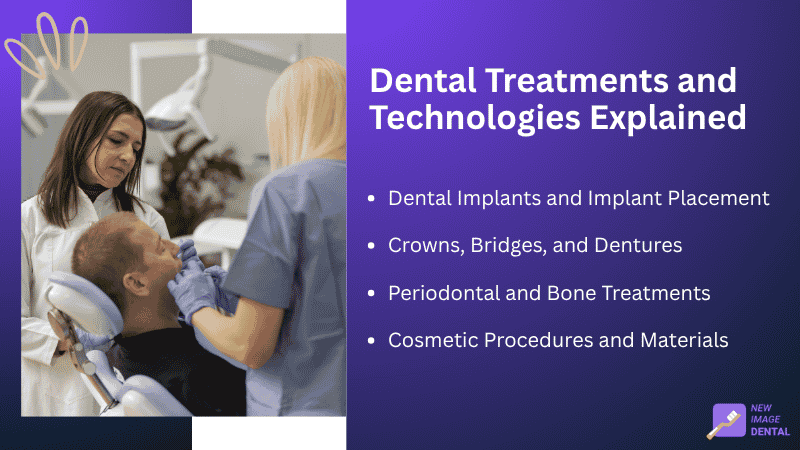
Dental Implants and Implant Placement
Dental implants are titanium posts that replace missing tooth roots. Your dentist surgically places them into your jawbone during a procedure called implant placement.
After surgery, the implant goes through osseointegration. This is when the bone grows around the implant and holds it in place. The process usually takes three to six months.
Once healing is complete, your dentist attaches a crown, bridge, or denture to the implant. Implant-supported dentures offer much better stability than traditional dentures that rest on your gums.
An implant-supported denture can replace all teeth in one arch. It snaps onto multiple implants and stays secure while you eat and speak.
You can also get single implants to replace individual teeth or implant-supported bridges for several missing teeth in a row.
Crowns, Bridges, and Dentures
Dental crowns cover and protect damaged teeth. You might need one after root canal therapy, to repair a cracked tooth, or to strengthen a tooth with a large filling.
Crowns come in different materials including porcelain, ceramic, and metal. Your dentist shapes the tooth and takes an impression to create a custom crown that fits perfectly.
Dental bridges fill gaps left by missing teeth. They anchor to natural teeth or implants on either side of the gap.
Crowns and bridges work together in this setup because the bridge connects to crowns placed on the supporting teeth.
Dentures replace multiple missing teeth or all teeth in an arch. Partial dentures attach to your remaining natural teeth with metal clasps.
Full dentures rest on your gums and may need adhesive for stability. Implant-supported options provide better chewing efficiency and reduce gum irritation.
Periodontal and Bone Treatments
Gum therapy treats infection and inflammation in the tissue around your teeth. Your dentist may perform deep cleaning procedures to remove bacteria below the gum line.
Advanced gum disease can destroy the bone that supports your teeth. Periodontal treatments stop this damage and help tissue heal. In severe cases, you might need surgery to reshape gum tissue or reduce deep pockets where bacteria collect.
Bone grafting rebuilds lost jawbone before implant placement. Your surgeon places bone material in areas where bone has deteriorated. This creates a strong foundation for dental implants.
The graft material can come from your own body, a donor, or synthetic sources. It takes several months for new bone to grow and become strong enough to support an implant.
Regular teeth cleaning appointments help prevent gum disease from returning after treatment.
Cosmetic Procedures and Materials
Porcelain veneers are thin shells that cover the front surface of teeth. They improve the shape, color, and size of teeth that are chipped, stained, or slightly crooked.
Veneers require removing a small amount of enamel from your tooth. Your dentist bonds them permanently to the prepared surface. They look natural and resist staining better than natural teeth.
Composite resin repairs minor chips, closes small gaps, and reshapes teeth. Your dentist applies the tooth-colored material directly to your tooth and shapes
it during one visit. While less expensive than veneers, composite resin may stain over time and typically doesn’t last as long.
Teeth whitening brightens discolored teeth using bleaching agents. Your dentist can provide custom trays for home use or perform in-office whitening for faster results.
Proper care at home with a soft-bristled toothbrush, fluoride toothpaste, and interdental brushes helps maintain results from all cosmetic procedures.
Cost, Insurance, and Long-Term Maintenance
Full mouth reconstruction typically costs between $15,000 and $60,000, though insurance may cover medically necessary portions. Your long-term success depends on following proper maintenance routines after treatment.
Factors Impacting the Cost
The cost of full mouth reconstruction varies widely based on how many teeth need treatment and which procedures you require.
If you need dental implants, crowns, and gum disease treatment, you’ll pay more than someone who only needs crowns and bridges.
Your location also affects pricing. Dentists in major cities typically charge more than those in smaller towns.
The materials used make a difference too. Porcelain and zirconia restorations cost more than basic materials, but they last longer and look more natural. Treatment typically takes 4-12 months, and this timeline can impact your total expenses.
The complexity of your case matters. If you have severe bite problems or need extensive bone grafting before implants, your costs will be higher than straightforward cases.
Dental Insurance and Financial Considerations

Your dental insurance may provide partial coverage if your reconstruction is medically necessary rather than cosmetic.
Insurance companies are more likely to cover treatments needed due to injury, severe decay, or medical conditions that affect your ability to eat and speak.
Insurers may cover oral surgeries, restorative crowns, bridges, TMJ therapy, and periodontal treatment. However, cosmetic elements like veneers typically aren’t included in coverage.
You have several payment options to restore your smile. Many dental offices offer payment plans that let you spread costs over time. Health savings accounts (HSAs) and flexible spending accounts (FSAs) can help you pay with pre-tax dollars.
Check with your insurance provider before starting treatment. Ask specifically which procedures they’ll cover and what documentation they need to approve claims.
Post-Treatment Oral Care and Prevention
You need to follow a strict maintenance schedule after your reconstruction is complete. Most patients visit their dentist every 3 to 4 months during the first year, then every 4 to 6 months afterward to check restorations, implants, and gum health.
Your daily oral hygiene routine becomes even more important. Brush your teeth twice daily with a soft-bristled toothbrush and fluoride toothpaste.
Flossing daily is essential to remove plaque between teeth and around implants. Use special floss threaders or water flossers if you have bridges or implants that make regular flossing difficult.
Avoid habits that damage your new restorations. Don’t chew ice, use your teeth to open packages, or grind your teeth at night without a protective guard.
With proper care, implant-supported restorations last 15-25 years with success rates above 95%.
Frequently Asked Questions
Many people wonder when dental problems cross the line from minor repairs to needing full reconstruction. Understanding the warning signs, symptoms, and evaluation process helps you decide when to seek professional care.
How do I know if my dental issues are severe enough to need a comprehensive rebuild?
If you have problems affecting most or all of your teeth at the same time, you might need full mouth reconstruction. This includes situations where multiple teeth are missing, badly damaged, or decayed beyond simple fillings.
Widespread dental damage, disease, or congenital conditions that make eating, speaking, or living comfortably difficult usually require comprehensive treatment. When fixing one or two teeth won’t restore proper function, a full rebuild may be necessary.
You should also consider reconstruction if your current dental work is failing in multiple areas. Old crowns, bridges, or fillings that break down together can affect your bite and jaw health.
What symptoms are signs that my bite problems are affecting my overall oral health?
Uneven wear on your teeth often means your bite is misaligned. You might notice some teeth are shorter than others or have flat, worn edges.
Pain when chewing or difficulty biting down evenly are clear warning signs. Your jaw shouldn’t hurt or click when you eat normal foods.
Frequent headaches, especially in the morning, can result from grinding or clenching due to bite problems. You might also feel tension in your jaw muscles or face throughout the day.
When do broken, worn, or missing teeth become a medical concern rather than just a cosmetic issue?
Missing teeth become a medical problem when they affect your ability to chew food properly. Poor chewing can lead to digestive issues and nutritional problems.
Broken or severely worn teeth expose the inner layers, which increases your risk of infection and tooth loss. When damage reaches deep into the tooth structure, simple repairs may not work anymore.
Severe tooth decay and tooth loss can cause your bite to shift, leading to uneven wear and jaw strain. Multiple missing teeth also trigger bone loss in your jaw, which changes your facial structure over time.
Can chronic jaw pain, headaches, or TMJ problems indicate a deeper dental problem that needs major treatment?
Yes, ongoing jaw pain often signals that your bite is putting uneven pressure on your teeth and jaw joints. This strain can crack teeth, wear down enamel, and damage the temporomandibular joint.
TMJ issues frequently develop from bite misalignment that affects most or all teeth. Small adjustments won’t fix the problem if the entire bite needs rebuilding.
Chronic headaches linked to jaw tension may mean you’re grinding or clenching because your teeth don’t fit together correctly. This pattern can cause serious damage over time if left untreated.
What kinds of conditions (like gum disease or tooth decay) typically lead to needing extensive restorative work?
Advanced gum disease destroys the bone and tissue supporting your teeth. As the condition progresses, teeth loosen, shift, or fall out completely.
Extensive damage from trauma or accidents can break or knock out several teeth at once. Sometimes the jawbone or surrounding tissue also gets damaged, requiring comprehensive rebuilding.
Severe tooth decay affecting multiple teeth may weaken them to the point where they break or can’t be saved. Large cavities that reach deep into tooth structure need more than basic fillings.
Bruxism, or teeth grinding, wears down tooth surfaces over years. When most teeth show significant wear, you may need full reconstruction to restore proper bite height and function.
Who should I see first for an evaluation, and what does the initial assessment usually involve?
Start by seeing a general dentist for a thorough examination. They can assess the extent of damage and refer you to specialists if needed.
Your initial assessment typically includes a comprehensive exam, X-rays, and sometimes 3D scans. The dentist will check your teeth, gums, bite alignment, and jaw joints.
For complex cases, you might need to see a prosthodontist who specializes in restoring teeth and oral structures. Look for licensed dentists with advanced training in prosthodontics or restorative dentistry.
The evaluation helps determine which procedures you need and in what order. Your dentist will create a treatment plan that lists each step, timeline, and estimated costs.