


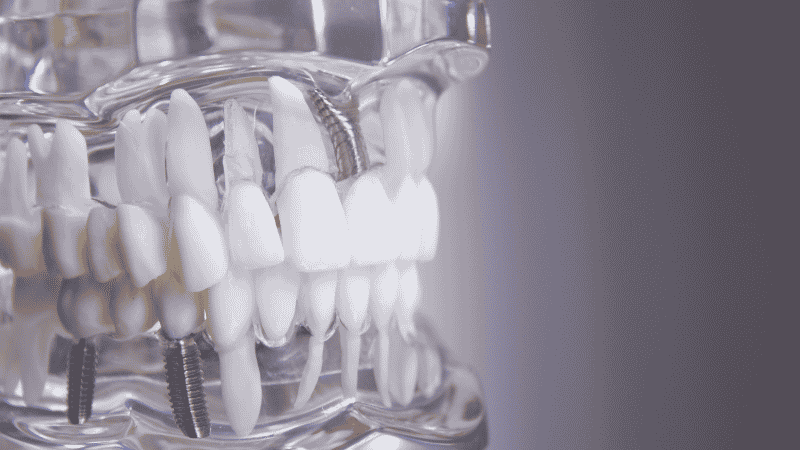
If you have several missing teeth, you may wonder whether All-on-4 or single dental implants will give you the best result. Both options restore function and improve your smile, but they work in different ways.
If you are missing many teeth in one area or an entire arch, All-on-4 often makes more sense, while single implants work best when you are replacing a few separate teeth.
Your bone health, budget, and long-term goals also shape the right choice for smile restoration.
When you understand how All-on-4 vs single implants supports dental implants and restoring your smile, you can move forward with confidence. The details matter, and knowing them helps you choose a plan that fits your needs and lifestyle.
Key Takeaways
- Your number of missing teeth often determines whether single implants or a full-arch option works best.
- Treatment steps, healing time, and cost can differ between these two approaches.
- A dental checkup helps you choose the safest and most effective plan for restoring your smile.
Table of Content
- Understanding Dental Implant Solutions
- Single Implants: Ideal Candidates and Benefits
- All-on-4 Implants: Full-Arch Restoration Approach
- Comparing Procedures, Costs, and Recovery
- Making the Choice: Factors and Consultation
- Frequently Asked Questions
Understanding Dental Implant Solutions
Dental implants replace missing teeth with fixed, stable restorations that look and function like natural teeth. Your implant dentist plans the number of implants, the type of restoration, and the timing based on your bone health and how many teeth you are missing.
What Are Dental Implants?
A dental implant is a small titanium post that an implant dentist places into your jawbone. It acts as an artificial tooth root and supports a crown, bridge, or full-arch prosthesis.
Implant dentistry focuses on both restorative dentistry and cosmetic dentistry. The goal is to restore chewing strength while also improving how your smile looks.
Each implant has three main parts:
- Implant post – placed in the jawbone
- Abutment – connects the post to the crown
- Crown or prosthesis – the visible tooth replacement
Unlike removable dentures, implants stay fixed in place. They help preserve jawbone structure and do not rely on neighboring teeth for support.
Overview of Implant Treatment Options
Your treatment options depend on how many teeth you are missing and the condition of your jawbone.
If you are missing one or a few teeth, your dentist may recommend placing individual implants. Each implant supports its own crown.
If you are missing most or all teeth in one arch, an All-on-4 system may work better. This method uses four implants to support a full set of teeth. It often reduces the number of implants needed compared to placing one implant for every tooth.
During your implant consultation, your provider reviews X-rays, checks bone levels, and discusses costs, healing time, and long-term maintenance.
How Dental Implants Work
Dental implants rely on a process called osseointegration. This happens when your jawbone grows around the titanium post and locks it in place.
For single implants, healing often takes about 3 to 6 months before the final crown is attached. In most cases, you do not receive a fixed tooth on the same day.
With full-arch systems, the timeline can differ. Many All-on-4 patients receive temporary fixed teeth the same day, while final restorations are placed after healing.
Once integrated, your implant functions like a natural tooth root. You brush and floss daily, and you visit your dentist for regular checkups to keep the implant and surrounding tissue healthy.
Single Implants: Ideal Candidates and Benefits
Single dental implants replace one missing tooth at a time. They protect your jawbone, restore chewing function, and blend in with your natural teeth. You get a stable, long‑term solution without changing nearby healthy teeth.
How Single Dental Implants Replace Missing Teeth
A single implant uses a small titanium post that your dentist places into your jawbone. This post acts like an artificial tooth root. Over a few months, your bone bonds to it in a process called osseointegration.
After healing, your dentist attaches an abutment to the implant. The abutment connects the implant to a custom porcelain crown. The crown matches the color and shape of your natural teeth.
You may wear a temporary restoration while the implant heals. Once complete, the final crown sits securely in place. It does not move like a removable denture.
Unlike a dental bridge, a single tooth implant does not require grinding down nearby teeth. It stands on its own and supports your bite directly through the jawbone.
Advantages of Individual Dental Implants
An individual implant restores your chewing function with strong support. You can bite and chew most foods without shifting or discomfort. The implant stays fixed in place.
Single dental implants also help maintain bone density. When you lose a tooth, the jawbone in that area can shrink. The implant stimulates the bone and slows that loss.
Cleaning a single implant is simple. You brush and floss like normal. Some people use superfloss or small interdental brushes to clean around the crown and gumline.
Many dentists note that single implants can look very natural because each tooth gets its own crown. Traditional implants that use individual porcelain crowns often provide strong cosmetic results.
Who Is a Good Candidate for Single Implants?
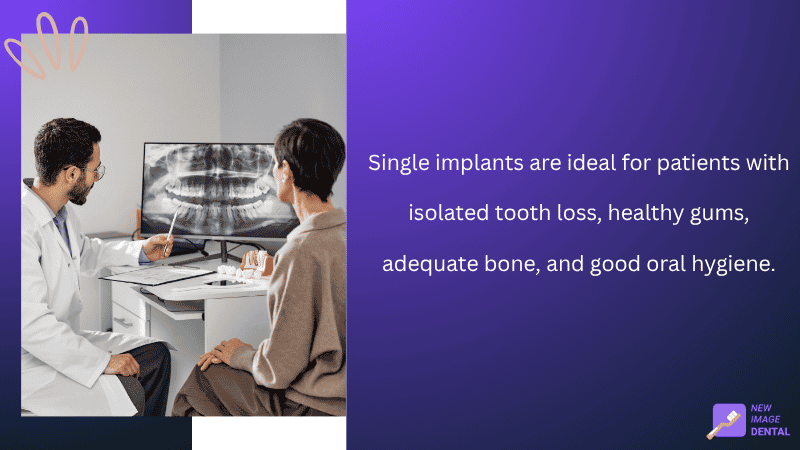
You may be a good candidate if you are missing one tooth or a few teeth in different areas. A single implant works best when the surrounding teeth are healthy and stable.
Your dentist will check your bone density. You need enough healthy bone to hold the implant firmly. If your bone is thin, you might need a graft before placement.
Good oral hygiene is also important. Healthy gums lower your risk of infection and implant failure. If you smoke or have uncontrolled medical conditions, your dentist may suggest other options first.
Single implants are often recommended for isolated tooth loss, while full-arch cases may require a different approach.
When to Consider a Single Tooth Implant
You should consider a single tooth implant when you want a fixed, long-term solution for one missing tooth. It works well if you do not want a removable partial denture.
If the teeth next to the gap are healthy, a single implant may be better than a bridge. A bridge depends on neighboring teeth for support. An implant does not.
You may also choose a single implant if you want to protect your jawbone in that area. The implant helps preserve bone and keeps your facial structure more stable over time.
Talk with your dentist about your goals, budget, and timeline. A clear plan helps you decide if a single implant fits your needs and your oral health.
All-on-4 Implants: Full-Arch Restoration Approach
All-on-4 dental implants replace every tooth in one jaw using four implants and a fixed prosthetic arch. You get a stable, non‑removable solution designed for full-arch restoration and long-term function.
How the All-on-4 Technique Works
All-on-4 implants support a full arch replacement with four titanium implants placed in your jaw. Your surgeon places two implants in the front of your mouth and two in the back at an angle. The angled placement helps use available bone and often avoids bone grafting.
A fixed implant-supported bridge attaches to these implants. This bridge holds a full set of teeth, also called a prosthetic arch. You cannot remove it on your own.
Many practices describe this as a full-arch implant restoration. It differs from single implants, where one implant replaces one tooth. With All-on-4, you replace an entire upper or lower arch at once.
This approach works best when you need full-mouth restoration on one or both jaws.
Who Benefits Most from All-on-4 Implants?
You may benefit from All-on-4 if you have:
- Many missing teeth in one arch
- Failing teeth due to decay or gum disease
- Severe bone loss that limits single implants
- Loose or uncomfortable dentures
All-on-4 dental implants suit people who want a fixed option instead of implant-supported dentures that snap in and out.
If your remaining teeth cannot be saved, your dentist may recommend full mouth restoration with one prosthetic arch per jaw.
This treatment is not for small gaps. If you only miss a few teeth, single implants or a short implant-supported bridge may make more sense.
A full exam and 3D scan help confirm if your bone can support this plan.
Immediate Function and “Teeth in a Day”
One major benefit of all-on-4 implants is immediate function. In many cases, you leave surgery with temporary teeth attached the same day.
This process is often called All-on-4 dental implants with “teeth in a day.” Your dentist removes damaged teeth, places the implants, and secures a temporary prosthetic arch in one visit.
You will still need healing time. The implants must fuse to your bone over several months. During that time, you follow a soft diet and attend checkups.
After healing, your dentist replaces the temporary teeth with a stronger, final implant-supported bridge. This final prosthetic is usually made from materials like zirconia or porcelain for better strength and wear.
All-on-4 vs. All-on-6: What’s the Difference?
The main difference between All-on-4 and all-on-6 is the number of implants supporting your arch.
| Feature | All-on-4 | All-on-6 |
| Implants per arch | 4 | 6 |
| Bone support | Good for moderate bone loss | Often used when more bone is available |
| Stability | High | May offer added support |
| Cost | Usually lower | Usually higher |
All-on-6 uses two extra implants to spread biting forces across your jaw. Some dentists suggest this option if you have strong bone and want added support.
Both options provide fixed full arch restoration. Your bone health, bite force, and budget help guide the final choice.
Comparing Procedures, Costs, and Recovery
When you compare implant options, you need to look at surgery steps, healing time, and long‑term cost. All-on-4 vs traditional implants differ most in how many implants your dentist places and how they support your dental restoration.
Implant Placement and Surgical Differences
With traditional dental implants, your dentist places one titanium implant for each missing tooth. If you are missing several teeth in different spots, you may need several implant placements.
Each implant acts as its own root. After healing, your dentist attaches a crown or an implant bridge on top.
All-on-4 works differently. Instead of placing one implant per tooth, your dentist places four implants in specific spots along your jaw to hold a full arch prosthesis.
All-on-4 often uses angled implants in the back of your jaw. This design helps support a full dental restoration with fewer implants and fewer surgical sites.
If you need to replace many teeth in one arch, four implants may replace what could require 8 to 14 traditional implants.
Bone Grafting and Bone Loss Considerations
Bone loss plays a big role in your treatment plan. When you lose teeth, your jawbone can shrink over time.
Traditional implants often require strong, thick bone at each implant site. If you have bone loss, your dentist may recommend bone grafting before implant placement.
Bone grafting adds time and cost. It also means another healing period before your final dental restoration.
All-on-4 can sometimes reduce the need for grafting. Because the back implants are angled, your dentist may use areas of stronger bone and avoid thin spots. This makes All-on-4 a practical option for people with moderate bone loss.
Still, severe bone loss may require grafting no matter which option you choose. Your dentist will use scans to measure your bone before surgery.
Treatment Timeline and Recovery Process
Traditional implants usually happen in stages. First comes implant placement. Then you wait several months for the titanium implant to fuse with your bone.
After healing, your dentist places the final crown or implant bridge. If you need bone grafting, this adds more time.
All-on-4 may move faster. Some clinics offer same-day procedures where your dentist places the implants and attaches a temporary full-arch restoration during one visit.
Recovery for both options includes swelling, mild pain, and a soft food diet for a few weeks. You must follow care instructions closely to protect your implants while they heal.
Cost Differences and Insurance Factors
Cost depends on how many implants you need and whether you require grafting.
A single traditional implant can cost several thousand dollars. If you need many implants across one arch, the total cost can rise quickly.
All-on-4 often costs less than placing an individual implant for every missing tooth in a full arch. You pay for four implants and one full-arch prosthesis instead of many separate crowns.
Dental insurance may cover part of the restoration but often does not cover the full surgical cost. Coverage varies by plan, so you should review your benefits and ask your dental office for a written estimate before you start treatment.
Making the Choice: Factors and Consultation
Choosing between All-on-4 and individual dental implants depends on your exact tooth loss pattern, bone health, and daily habits. A clear review of these factors helps you select treatment options that fit your long-term goals.
Number and Position of Missing Teeth
Start with how many missing teeth you have and where they sit in your mouth. A single gap in one area often works well with individual dental implants. Each implant replaces one tooth and stands on its own.
If you have several missing teeth in different spots, your dentist may suggest multiple dental implants. This approach keeps healthy teeth untouched and replaces only what you lost.
When you are missing most or all teeth in one arch, All-on-4 may make more sense. This method uses four implants to hold a full set of teeth.
Position also matters. Front teeth affect your smile and speech, while back teeth handle chewing force. Your dentist will match the solution to how each area functions.
Bone Health and Gum Disease
Healthy bone and gums support any implant. Without enough jawbone, an implant may not stay stable over time.
Traditional single implants sometimes require bone grafting if bone loss has occurred. In some cases, All-on-4 can reduce the need for grafting because the back implants are placed at an angle.
Gum disease also plays a major role. Active periodontal disease can damage bone and soft tissue. If you have gum disease, your dentist will treat it first. A periodontics exam checks pocket depth, bleeding, and bone levels before moving forward.
Stable gums and strong bone give both options a better chance of long-term success.
Lifestyle, Maintenance, and Longevity

Think about how much daily care you can commit to. Individual implants feel and clean like natural teeth. You brush and floss around each one.
All-on-4 restorations connect several teeth to one frame. You still brush daily, but you may need special floss or water flossers to clean under the bridge.
If one single implant crown chips or wears down, your dentist can repair that tooth alone. With full-arch restorations, damage may affect a larger section. Cost and repair time can differ.
Your bite force, grinding habits, and smoking history also matter. Heavy grinding can stress both systems. Your dentist may suggest a night guard to protect your investment.
Comprehensive Consultation and Smile Restoration
A comprehensive consultation gives you clear answers. Your dentist will take digital X-rays or 3D scans to measure bone height and width. They will also review your medical history and current oral health.
Expect a discussion about your goals. Do you want to replace a few missing teeth or restore your entire smile? Do you prefer a fixed full-arch option or separate teeth?
Your provider may consult with a periodontics specialist if you show signs of advanced gum disease. Together, they design a plan that supports long-term function and comfort.
This step-by-step review helps you choose treatment options that restore your smile in a way that fits your health, budget, and daily life.
Frequently Asked Questions
Choosing between individual implants and a full-arch solution depends on how many teeth you are missing, how strong your jawbone is, how much you want to spend, and how long you can wait for healing.
Treatment time, daily cleaning, and long-term durability also differ in clear ways.
How do I know whether I’m a better fit for a full-arch option or individual implants when I’m missing several teeth?
You are often a better fit for individual implants if you are missing a few teeth in different spots and still have healthy teeth nearby. Each missing tooth can receive its own implant and crown.
You may be a stronger candidate for a full-arch option if you are missing most or all teeth in the upper or lower jaw. An approach like All-on-4 vs traditional implants explains how four implants can support a full set of fixed teeth.
Your dentist will check your bone levels with X-rays or 3D scans. They will also review your gum health and medical history before making a recommendation.
What are the main cost differences between replacing multiple teeth with separate implants versus a fixed full-arch solution?
Separate implants usually cost more when you replace many teeth. You pay for each implant, each abutment, and each crown.
A fixed full-arch solution often costs less per arch because it uses fewer implants. Many offices list All-on-4 vs traditional implants key differences and note that full-arch treatment can reduce total implant numbers.
In general, a full arch with four implants may range from about $15,000 to $30,000 per arch. Replacing many teeth one by one can raise the total into the $25,000 to $50,000 range, depending on how many implants you need.
How long does treatment usually take from start to finish for each option, including healing time?
Individual implants often take longer if you need several of them. After placement, the bone usually needs 3 to 6 months to fuse to each implant.
Full-arch options can move faster in some cases. Many providers describe how All-on-4 uses just four implants per arch and may allow temporary teeth on the same day.
You still need a healing period for the implants to bond with bone. Final teeth are placed after healing, which often takes a few months.
Will I need bone grafting for either approach, and how does that affect the timeline?
You may need bone grafting if your jawbone has shrunk after tooth loss. This is more common when teeth have been missing for a long time.
Individual implants often require more bone because each implant stands on its own. A full-arch option like All-on-4 is best suited for full-arch replacement and may avoid grafting by placing implants at angles in stronger bone areas.
If you need a graft, you must wait several months for the new bone to heal before placing implants. This can extend your total treatment time.
What does daily cleaning and long-term maintenance look like for these different implant solutions?
You brush and floss individual implants much like natural teeth. Each crown stands alone, so you can clean between them with regular floss or small brushes.
With a fixed full-arch bridge, all teeth connect as one piece. Many dentists explain that single implants are cleaned like natural teeth, while full-arch restorations may need special tools like floss threaders or water flossers to clean underneath.
You should visit your dentist every six months. Professional cleanings help protect the implants and the surrounding gum tissue.
How long do these options typically last, and what kinds of complications should I be aware of?
Both options can last many years when you care for them well. Implant success rates often exceed 95 percent in healthy patients who do not smoke and who keep good oral hygiene.
Complications can include infection around the implant, bone loss, or implant failure. Full-arch prosthetic teeth may need repair or replacement over time due to normal wear.
You lower your risk by brushing daily, avoiding tobacco, and keeping regular dental visits. Good habits make a real difference in how long your implants last.