


Dental anxiety can make even a simple visit feel stressful. You want to stay calm, but you also want to choose the right sedation option for your needs. Oral sedation and nitrous oxide both help you relax, yet they work in very different ways.
If you want light, fast-acting relaxation with quick recovery, nitrous oxide may fit you best, but if you need deeper calm and do not mind feeling drowsy for several hours, oral sedation dentistry may be the better choice.
Nitrous oxide works within minutes and usually wears off quickly, while oral sedation uses medication that can leave you groggy for much of the day.
Your comfort level, the length of your procedure, and how strong your dental anxiety feels all play a role. When you understand how each option affects awareness and recovery time, you can choose with confidence.
Key Takeaways
- Nitrous oxide offers mild relaxation and wears off quickly after treatment.
- Oral sedation provides deeper calm but requires longer recovery and a driver.
- Your anxiety level and procedure type help determine the safest and most comfortable choice.
Table of Content
- Understanding Sedation Dentistry Methods
- Comparing the Effects: Relaxation, Awareness, and Recovery
- Suitability for Different Patients and Procedures
- Safety, Side Effects, and Aftercare
- Exploring Advanced Sedation: IV and General Anesthesia
- Frequently Asked Questions
Understanding Sedation Dentistry Methods
Sedation dentistry uses different sedation methods to help you stay calm and comfortable during treatment. The two most common options are nitrous oxide and oral sedation, and each works in a different way.
How Nitrous Oxide (Laughing Gas) Works
Nitrous oxide, often called laughing gas, is a mild sedative that you breathe in through a small mask placed over your nose. You stay awake the whole time, but you feel calm and less tense.
The gas works quickly. Within a few minutes, you may feel light, relaxed, or slightly tingly. Your dentist can adjust the amount during the visit, which helps control how relaxed you feel.
One major benefit is how fast it wears off. Once the mask comes off, the effects fade within minutes. Many patients return to normal activities right after their appointment.
Basics of Oral Sedation and Oral Conscious Sedation
Oral sedation involves taking a pill before your appointment. This method is sometimes called oral conscious sedation because you stay awake but feel deeply relaxed.
Your dentist usually asks you to take the medication about an hour before treatment. The medicine helps reduce anxiety and may make you feel sleepy. Some people remember little about the procedure afterward.
The effects last longer than nitrous oxide. You may feel drowsy for several hours after your visit. Because of this, you need someone to drive you home and may need to rest for the rest of the day.
Oral sedation often works well if you have moderate to strong dental anxiety or need a longer procedure.
Key Differences in Administration
The biggest difference between these sedation methods is how you receive them. Nitrous oxide goes through a nose mask during the appointment. Oral sedation comes as a pill that you take before you arrive.
With nitrous oxide, your dentist controls the level throughout the visit. The effects start and stop quickly. This makes it easier to adjust your comfort in real time.
With oral conscious sedation, the dose is set before treatment begins. The effects build gradually and last longer.
Both options fall under sedation dentistry. The right choice depends on your anxiety level, the length of the procedure, and how much recovery time you can allow.
Comparing the Effects: Relaxation, Awareness, and Recovery
Both nitrous oxide sedation and oral sedation help you relax, but they differ in how deeply they calm you and how long the effects last.
You will also notice clear differences in how alert you feel during treatment and how quickly you return to normal activities.
Levels of Sedation: Light vs Deeper Relaxation
Nitrous oxide sedation usually provides light sedation. You stay awake and aware, but you feel calm and less sensitive to discomfort.
Many people describe a mild, floating feeling while still being able to respond to questions.
This type of conscious sedation works well for mild anxiety or short procedures. You can hear your dentist and follow simple directions without trouble.
Oral sedation often creates a deeper level of conscious sedation. It does not usually cause deep sedation where you are fully asleep, but you may feel very drowsy. Some people remember little about the visit afterward.
If you have strong dental fear or need a longer procedure, oral sedation may help you feel more relaxed. It offers a stronger calming effect than nitrous oxide, but you will feel less alert during treatment.
Onset Speed and Duration of Sedation
Nitrous oxide works quickly. You breathe it in through a small nose mask, and you may feel relaxed within a few minutes. Dentists can adjust the level during your visit, which gives you more control.
The calming effect lasts only while you breathe the gas. Once the mask comes off, the sedation fades quickly.
Oral sedation works differently. You take a prescribed pill before your appointment, so the medication has time to enter your system. It takes longer to start, but the relaxing effect lasts much longer.
Some medications used for oral conscious sedation can last for several hours, and their effects may linger up to eight hours. This longer duration can help during extended treatments, but it also affects your recovery time.
Recovery Time and Returning to Daily Life
Recovery is one of the biggest differences between these sedation options.
With nitrous oxide sedation, the effects wear off quickly after your dentist gives you pure oxygen. Most people can drive themselves home and return to work or school the same day.
This makes it a practical choice for short visits or busy schedules.
Oral sedation requires more planning. Because you may feel groggy for hours, you will need someone to drive you home. Many dentists suggest taking the rest of the day off.
If you want a faster return to normal activity, nitrous oxide may suit you better. If you prefer deeper relaxation and do not mind a longer recovery, oral sedation may be the better fit.
Suitability for Different Patients and Procedures
Your level of fear, your medical history, and the type of dental work you need all shape the best choice. Oral conscious sedation and nitrous oxide both calm you, but they fit different situations.
Managing Dental Anxiety and Dental Phobia
If you feel mild to moderate dental anxiety, nitrous oxide often works well. You breathe it through a small nose mask, and you feel relaxed within minutes. When the mask comes off, the effects fade quickly, so you can usually drive yourself home.
Nitrous oxide works best for short, simple procedures like fillings or cleanings. Research shows it performs about as well as other sedation methods for patient satisfaction and procedure success, based on a review of nitrous oxide in dental care published on the National Library of Medicine.
If you struggle with strong dental phobia, oral conscious sedation may help more. You take a pill before your visit. It makes you deeply relaxed and drowsy, and you may remember little about the procedure.
Oral sedation suits longer or more complex treatments. You will need someone to drive you home because the effects last several hours.
Handling Sensitive Gag Reflexes
A strong gag reflex can make X-rays, impressions, and back tooth work stressful. Sedation helps by relaxing your body and lowering your reaction.
Nitrous oxide can reduce gagging during treatment because it eases tension and keeps you calm while you stay awake and cooperative. Dentists often choose it when they need you to respond to simple instructions.
Oral conscious sedation may help if your gag reflex links to severe anxiety. The medication relaxes your muscles and lowers awareness, which can make it easier to complete longer procedures.
If your dentist plans extensive work in the back of your mouth, oral sedation may provide steadier control. For shorter visits or minor procedures, nitrous oxide often gives enough relief without long recovery time.
Choosing for Children, Adults, and Special Cases
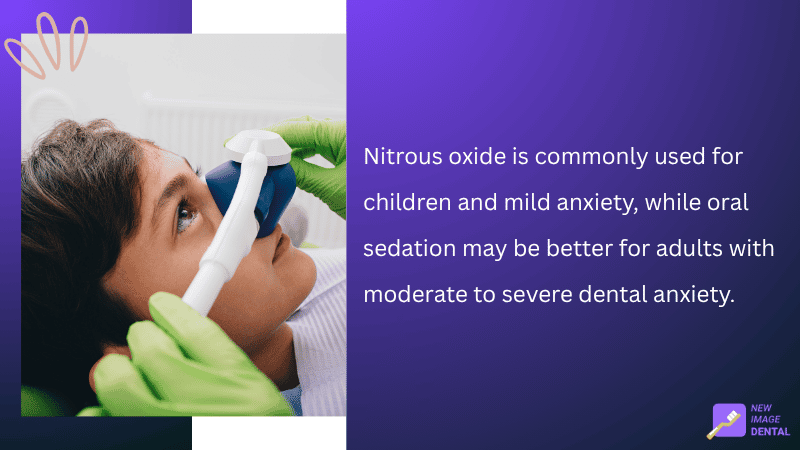
Nitrous oxide has a long track record in pediatric care. The American Academy of Pediatric Dentistry recognizes it as a safe and effective option for helping children stay calm and cooperative.
For children with mild anxiety, nitrous oxide often works well because it acts fast and wears off quickly. Parents also like that recovery is short.
Adults with moderate to severe dental anxiety may prefer oral conscious sedation.
Many dental offices explain the differences between oral sedation and nitrous oxide options so you can match the method to your comfort level and procedure type.
In special cases, such as patients with certain medical conditions or very long procedures, your dentist may suggest a different approach. Your health history, medications, and past reactions to sedation should guide the final choice.
Safety, Side Effects, and Aftercare
You want sedation that keeps you calm and safe. Both oral sedation and nitrous oxide have strong safety records when a trained dental team monitors you and follows clear aftercare steps.

Monitoring and Professional Supervision
Your dental team reviews your health history before giving any form of dental sedation. They check for heart, lung, or liver problems and review your current medications. This step helps prevent harmful drug interactions.
With oral sedation, you usually take a pill such as a benzodiazepine like Valium or Halcion before your visit.
These drugs can make you sleepy and slow your reflexes. Because of that, your dentist tracks your breathing, blood pressure, and oxygen levels during the procedure.
Nitrous oxide works differently. You breathe the gas through a small mask over your nose. The team adjusts the level during treatment and can stop it at any time. Both methods are safe when trained professionals supervise you closely.
Common Side Effects and Contraindications
You may notice mild side effects with either option. Most effects wear off without treatment.
Oral sedation side effects may include:
- Drowsiness that lasts for hours
- Dry mouth
- Headache
- Nausea
- Memory gaps about the visit
Because benzodiazepines slow the central nervous system, they are not right for everyone. You should avoid them if you are pregnant, have severe breathing problems, or have a history of substance misuse unless your doctor clears you.
Nitrous oxide side effects may include:
- Lightheadedness
- Tingling in your hands or feet
- Mild nausea
Nitrous oxide is often used for both adults and children. Many dentists note that it is mild and wears off quickly, which makes it common in pediatric care.
Aftercare and Post-Procedure Guidelines
Your recovery plan depends on the type of sedation you choose.
After oral sedation, you will likely feel sleepy for several hours. You must:
- Arrange for a responsible adult to drive you home
- Avoid driving, alcohol, or heavy equipment for 24 hours
- Rest for the remainder of the day
You may also feel groggy or less alert. Plan simple activities and drink water.
With nitrous oxide, recovery is usually faster. Once your dentist stops the gas and gives you oxygen, the effects fade within minutes. Many people return to normal tasks the same day.
Even so, listen to your body. If you feel dizzy or unwell after any sedation, contact your dental office right away.
Exploring Advanced Sedation: IV and General Anesthesia
Some dental visits call for stronger sedation methods than oral medication or nitrous oxide. IV sedation and general anesthesia offer deeper levels of relaxation for long or complex procedures.
IV Sedation for Complex Needs
IV sedation delivers medication directly into your bloodstream through a small line in your arm or hand. Because it works quickly, your dentist can adjust the level of sedation during the procedure.
You stay in a state of deep sedation, but you can still respond if someone speaks to you. Many people feel so relaxed that they fall asleep. You may not remember much of the visit.
Dentists often suggest IV sedation if you have severe dental anxiety or need a long treatment, such as oral surgery. The team checks your heart rate and blood pressure the entire time to keep you safe.
General Anesthesia and Deep Sedation Overview

General anesthesia places you in a fully unconscious state. You do not respond to sound or touch, and you will not remember the procedure.
Doctors often use general anesthesia for major oral surgery or for patients who cannot safely tolerate other sedation methods. This option may take place in a hospital or surgical center, depending on your needs.
Deep sedation falls between IV sedation and general anesthesia. You are almost fully asleep, but you may still breathe on your own and respond in limited ways.
After general anesthesia, you will need more recovery time. You must arrange for someone to drive you home and stay with you for several hours.
Frequently Asked Questions
Choosing between oral sedation and nitrous oxide affects how you feel during treatment, how long recovery takes, and what type of dental work you can handle.
Your health history, anxiety level, and the procedure itself all play a role.
What are the main differences in how oral sedation and nitrous oxide feel during a dental visit?
Nitrous oxide creates a light, calm feeling while you stay awake and aware. You can answer questions easily, and the mask delivers the gas through your nose during the visit.
Oral sedation feels stronger. You take a pill before your appointment, and you may feel very drowsy. You stay conscious, but you might not remember much about the procedure.
Many dentists describe nitrous oxide as mild relaxation, while oral sedation provides deeper calming effects, as explained in this guide on nitrous oxide vs. oral sedation.
How quickly do oral sedation and nitrous oxide start working, and how long do their effects last?
Nitrous oxide starts working within minutes. Your dentist can adjust the level during the visit, and the effects usually wear off shortly after the mask comes off.
Oral sedation takes longer to start. You often take the pill about an hour before treatment, and the sleepy feeling can last several hours after the procedure.
Recovery time differs. Many patients choose nitrous oxide because it allows faster recovery, while oral sedation may require you to rest for the remainder of the day.
Will I still feel pain during dental treatment if I choose oral sedation or nitrous oxide?
Both options reduce anxiety, not pain by themselves. Your dentist will still use local anesthesia to numb the treatment area.
Nitrous oxide helps you feel calm, but you remain aware of pressure and movement. Oral sedation can make you less aware of these sensations and less likely to remember them later.
You should not feel sharp pain during treatment if proper numbing is used.
Who is a better candidate for oral sedation versus nitrous oxide for dental anxiety?
You may benefit from nitrous oxide if you have mild to moderate anxiety and need a routine cleaning or simple procedure. It also works well if you want to drive yourself home.
Oral sedation may fit you better if you have strong dental fear, a sensitive gag reflex, or need a longer or more complex procedure. It often helps patients who struggle to sit still for extended treatment.
Your dentist will review your medical history and current medications before recommending either option.
Can nitrous oxide be safely combined with anxiety medications like Halcion or Xanax?
Dentists sometimes combine nitrous oxide with oral anti-anxiety medications, but they do so with caution. Both can cause drowsiness and slow reaction time.
You should never mix medications on your own. Always tell your dentist about every drug you take, including prescriptions like Halcion or Xanax.
Your provider will decide if the combination is safe based on your health, age, and dosage.
For wisdom teeth removal, how do nitrous oxide and deeper sedation options compare?
Wisdom teeth removal often involves more pressure, noise, and time than a simple filling. Nitrous oxide may not provide enough relaxation for some patients.
Many dentists recommend oral sedation, IV sedation, or even general anesthesia for impacted or surgical extractions. If you feel very anxious about surgery, ask your dentist which level of sedation matches the complexity of your case and your comfort level.