


Hearing that you need a second surgery can feel like a surprise, especially when you thought the implant post was the hard part. You’re not alone in wondering why one procedure turned into two.
Most of the time, the answer is simple. Dental implants that replace missing teeth are often placed below the gum line first, left to heal quietly, then uncovered in a short follow-up visit so your crown can be attached.
This approach is known as two-stage dental implant surgery, and it allows the implant to heal under the gum before the final restoration is placed.
A smaller number of patients need a different kind of second procedure: a bone graft, done separately from implant placement because the jaw needs rebuilding first. Knowing which situation applies to you makes the whole timeline easier to follow.
Key Takeaways
- Many implant patients need a short uncovering procedure after their implant heals under the gum, not a second major surgery.
- A separate bone graft is a different situation, needed when the jawbone doesn’t have enough width or density to hold an implant right away.
- Even “same-day” or one-stage implants still need months of quiet healing before a permanent crown goes on.
What Counts as the Second Implant Surgery?
The second surgery usually means one of two things, and they are not the same procedure. Your dentist may be talking about uncovering a healed implant, or about placing a bone graft before the implant ever goes in.
A Covered Implant Needs a Later Uncovering Procedure
With a two-stage dental implant, your surgeon places the titanium post and stitches the gum tissue completely over it. A small cover screw seals the top so bone and tissue heal around it undisturbed.
Months later, a short follow-up visit reopens that spot. The cover screw comes off, and a healing abutment is placed so your gums can form a natural shape around it before the crown goes on.
This second visit is far simpler than the first. Most people describe it as quick, with mild soreness that clears up in a day or two.
A Bone Graft May Be a Separate Surgery Instead
A bone graft is a different kind of second procedure, done when your jawbone is too thin or soft to anchor an implant safely. Bone loss from an old extraction, gum disease, or years without a tooth in that spot can leave too little structure to work with.
Depending on how much bone is missing, your dentist may place the graft and the implant at the same visit, or treat them as two separate surgeries months apart.
Larger grafts need time to mature into solid bone before an implant can safely go in, since placing it too soon raises the risk of implant failure.
What Happens Between Implant Placement and the Crown?
The dental implant process moves through three main steps: placing the post, letting it heal, and uncovering it for the crown. Each step has its own purpose, and skipping ahead can put the whole implant at risk.
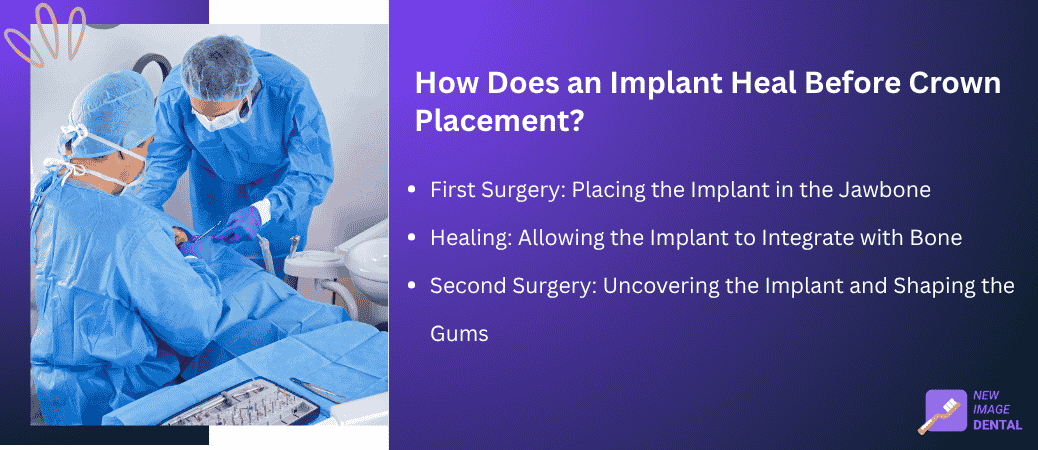
First Surgery: Placing the Implant in the Jawbone
Implant surgery starts with numbing the area, usually with local anesthesia. Your surgeon opens a small section of gum tissue, prepares a channel in the jawbone, and threads the titanium implant into place.
In a two-stage approach, a cover screw seals the implant and the gum is stitched fully over it. Nothing shows in your mouth once you leave the chair. A single implant placement typically takes between 20 minutes and an hour.
Healing: Allowing the Implant to Integrate with Bone
This waiting period is where osseointegration happens, the process where bone cells grow directly onto the implant’s surface and lock it in place.
It commonly takes three to six months, though upper jaw sites can take longer than lower jaw sites because the bone there tends to be less dense.
You won’t feel much during this stretch. Mild swelling and soreness in the first few days are normal, and most people return to regular activity within about a week.
Second Surgery: Uncovering the Implant and Shaping the Gums
Once your dentist confirms the implant has integrated, a short procedure reopens the gum and removes the cover screw. A healing abutment is placed so the gum tissue can form a snug, natural shape around it over the following weeks.
This step matters for how your final crown will look. Without it, the gum line around the crown can end up uneven.
Good planning here, discussed during your initial dental implant surgery process consultation, helps the final result blend in with your other teeth.
When Does Bone Grafting Add a Separate Procedure?
Bone grafting adds a separate procedure when your jawbone doesn’t have enough width, height, or density to hold an implant securely from day one. It’s a preparatory step, not a replacement for the implant surgery itself.
How Bone Density and Gum Health Affect the Plan
Bone density varies by location in the mouth, and back teeth often sit in softer bone than front teeth. Your implant needs a tight initial fit, known as primary stability, and soft bone makes that harder to achieve right away.
Gum health plays a role too. Inflamed or receding gum tissue can complicate healing, so your dentist may address that before or alongside any bone work.
Diabetes, smoking, and certain medications can also slow healing, which is one reason your dentist may plan more conservatively if these apply to you.
When a Graft Can Be Done During Implant Placement
Small amounts of bone loss often allow the graft and the implant to be placed during the same visit. Moderate to larger bone loss usually calls for the graft first, with implant placement following several months later once the graft has matured.
You can read more about how this decision gets made in a guide on bone graft for dental implants.
The amount of bone missing, more than any single fixed rule, determines whether your treatment plan adds one extra surgery or keeps the process to two visits total.
Can a One-Stage Implant Avoid the Uncovering Surgery?
A one-stage implant can skip the uncovering procedure, because the healing abutment is placed at the same time as the implant and pokes through the gum from the start. It does not skip the healing itself.
How One-Stage and Submerged Implants Differ
In a one-stage approach, the implant and a healing abutment go in together, and the abutment stays visible above the gum line while the bone heals underneath.
A comparative review of one-stage and two-stage dental implants describes this as one of the two main surgical techniques used in implant dentistry, alongside the submerged, two-stage method where the implant is fully covered.
Choosing between them depends on bone quality, how tight the implant fits at placement, and whether you’re in a visible area of the mouth where gum shaping matters more.
Why a Same-Day Tooth Does Not Eliminate Healing
A temporary tooth attached on the same day as surgery looks reassuring, but it does not mean osseointegration is finished. The bone still needs months to bond with the implant underneath, whether or not a visible crown sits on top.
If you’ve looked into new teeth in one day options, it helps to know that the final, permanent crown still waits for confirmed healing, even when a temporary one is in place right away.
Does Having Multiple Implants Change the Number of Surgeries?
Multiple dental implants don’t automatically mean multiple surgical visits. Your dentist can often place several implants in one appointment, whether you need two single implants or a full arch supported by an approach like all-on-four.
What changes is the complexity of planning, not necessarily the number of dental implants per visit.
An implant-supported bridge or full denture replacing many teeth may still be completed in the same one or two surgical stages as a single implant, just with more sites to manage during healing.
How Long Until the Permanent Crown Is Placed?
Most patients wait three to six months between implant placement and a permanent crown, though the exact timing depends on how your individual healing progresses.
Your dentist won’t guess at this; it’s confirmed with an exam and often an X-ray.
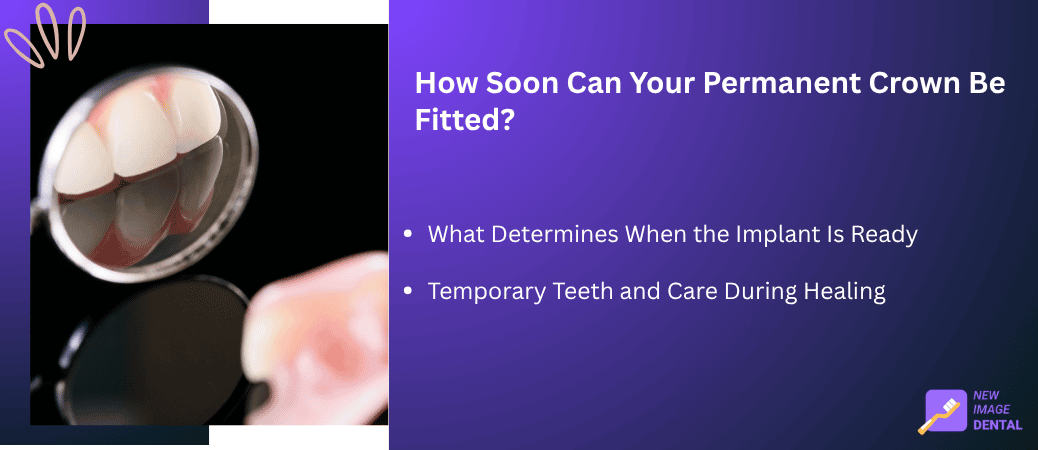
What Determines When the Implant Is Ready
Readiness comes down to osseointegration, not the calendar. Your dentist checks that the implant feels stable and that bone has filled in around it before moving forward to the abutment and crown stage.
Rushing this step raises the risk of implant failure, so a slightly longer wait is often the safer path if your healing is taking its time.
Temporary Teeth and Care During Healing
A temporary crown or partial denture often fills the gap while you wait, keeping your smile looking normal day to day.
Good oral hygiene matters during this stretch, since the gum tissue around a healing implant can still develop inflammation if plaque builds up.
Once your permanent crown is placed, ongoing implant maintenance, including regular checkups and daily cleaning, helps protect your investment for years to come. You can find more detail on this in a guide to dental implant care maintenance.
Understanding Your Own Surgery Plan

Your own plan depends on your bone, your gum tissue, and how many teeth you’re replacing, not on a one-size-fits-all rule.
Two patients with the same missing tooth can end up with different surgical timelines once their dentist looks at bone density, gum health, and healing history.
A consultation is the clearest way to find out which category you fall into: an uncovering procedure after a healed implant, a separate bone graft beforehand, or a one-stage approach that skips the second surgery altogether.
At New Image Dental, Dr. Adams can review your imaging and explain whether you need a two-stage approach, a separate bone graft, or another implant plan based on your jawbone and healing needs.
This conversation helps you understand what to expect before treatment begins.
Bringing a list of questions to that appointment, including how many visits your plan involves and what each one covers, helps you walk in with realistic expectations rather than surprises along the way.
Frequently Asked Questions
Is the second implant surgery as involved as the first?
No, the uncovering procedure is usually much shorter and simpler than the first surgery. It involves reopening a small area of healed gum, removing the cover screw, and placing a healing abutment, with most patients back to normal activity within a day or two.
How long does an implant need to heal before a crown?
Healing before a crown typically takes three to six months, depending on bone density, the location in your jaw, and your overall health. Your dentist confirms readiness through an exam and imaging rather than a fixed calendar date.
Can I get a temporary crown while my implant heals?
Yes, a temporary crown or partial denture is common while the implant integrates with bone underneath. It restores appearance and some function, but it does not mean the permanent crown can go on any sooner than your healing allows.
Does a bone graft always mean an extra surgery?
Not always. Small amounts of bone loss can often be grafted in the same visit as implant placement, while larger grafts usually require a separate procedure with months of healing before the implant goes in.
How long can an implant remain without a permanent crown?
An implant can sit without a permanent crown for as long as your treatment plan requires, often several months while osseointegration completes.
A temporary tooth typically fills the gap during that time, and your dentist will let you know when imaging and a clinical check confirm it’s ready for the final restoration.