


Waking up with a sore jaw, sensitive teeth, or a headache can be a sign that you are grinding or clenching your teeth while you sleep.
You may not even realize you are doing it until your dentist notices worn enamel, chips, or other signs of damage.
A night guard for teeth grinding can create a protective barrier between your upper and lower teeth, reducing the force they place on each other during sleep.
It may also help reduce strain on your jaw muscles and joints.
But not every night guard is the same, and the right type depends on how much you grind, your bite, and your dental needs.
This guide explains your options, costs, benefits, and what t
Key Takeaways
- A night guard for teeth grinding can protect your enamel, dental restorations, and jaw from the pressure caused by nighttime grinding.
- Custom night guards usually provide a more precise fit, while soft, hard, dual-layer, and over-the-counter options may suit different needs.
- A night guard can reduce the strain caused by grinding, but it does not treat the underlying cause of bruxism or cure TMJ disorders.
- Proper fit, regular cleaning, and replacing a worn guard are important for keeping your appliance effective and comfortable.
Table of Content
- Creating a Protective Barrier During Sleep
- Choosing the Right Type and Fit
- Night Guard Cost, Lifespan, and Long-Term Value
- What to Expect: Use, Care, and Follow-Up
- Frequently Asked Questions
Creating a Protective Barrier During Sleep
A night guard for teeth grinding fits over your teeth like a thin shield. It stops your top and bottom teeth from grinding directly against each other.
Without this barrier, grinding can wear down your enamel over time. This can make your teeth more sensitive and increase your risk of cavities.
A night guard also protects any crowns, fillings, or other dental restorations you may have.
These repairs can crack or wear out faster if they are exposed to constant grinding pressure.
Think of the guard as a cushion. It absorbs the force of grinding so your natural teeth and dental work don’t have to.
Reducing Strain on Jaw Muscles and Joints
When you clench your jaw at night, your jaw muscles stay tense for hours. This can lead to soreness, tightness, and even jaw pain that lasts into the day.
A night guard helps by keeping your jaw in a more relaxed position. This can ease the pressure placed on your temporomandibular joint, which connects your jaw to your skull.
Over time, ongoing clenching can contribute to TMJ disorders. These issues can cause clicking sounds, stiffness, or trouble opening your mouth fully.
If you’re experiencing these symptoms, it may help to learn what TMJ is and how it’s treated.
By reducing strain on your jaw joints, a night guard may help lower your chances of developing these problems or make existing symptoms feel less intense.
What a Guard Can and Cannot Do
A dental appliance like a night guard is a helpful tool, but it has limits. It protects your teeth and eases jaw strain, but it does not cure the habit of clenching or grinding.
It also won’t fix the root cause of your bruxism, which can come from stress, sleep issues, or bite problems.
If you already have TMJ problems, a guard may reduce discomfort but might not resolve the condition completely.
Here’s a quick breakdown:
| A Night Guard Can | A Night Guard Cannot |
| Protect enamel from wear | Stop the urge to clench |
| Ease pressure on jaw joints | Cure TMJ disorder |
| Protect dental restorations | Treat the cause of bruxism |
A night guard works best as one part of a larger plan for protecting your smile.
Choosing the Right Type and Fit
Night guards come in several materials and price points, and picking the right one depends on how hard you grind, your budget, and whether you want a dentist involved.
The fit matters just as much as the material, since a guard that doesn’t sit correctly can cause more problems than it solves.
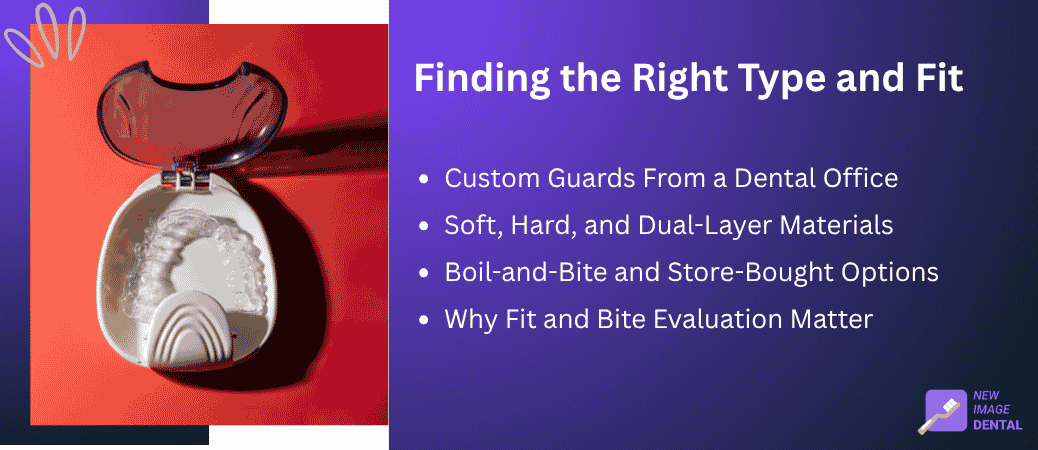
Custom Guards From a Dental Office
A custom night guard is made just for your mouth. Your dentist takes an impression or digital scan of your teeth, then sends it to a lab that builds a guard shaped exactly like your bite.
This option costs more than store-bought guards, usually somewhere between $300 and $1,000. But you get a guard that fits snugly and won’t slip around while you sleep.
Dentists often recommend custom night guards for people with moderate to severe grinding. They’re also a smart pick if you have a misaligned bite or existing dental work you need to protect.
Since a dentist checks your mouth first, they can catch other issues early too.
Soft, Hard, and Dual-Layer Materials
Night guards aren’t all made the same way. The material you choose affects comfort, durability, and how well it holds up against grinding.
- Soft night guards: made from flexible material, comfortable for light grinding, but wear out faster with heavy use
- Hard night guards: rigid and durable, better for severe grinding or clenching, may feel stiff at first
- Dual-layer guards: soft on the inside, hard on the outside, a middle ground for moderate to heavy grinding
Your dentist can tell you which material matches your grinding pattern.
Boil-and-Bite and Store-Bought Night Guards
If you want something faster and cheaper, a boil-and-bite guard might work for you. You heat it in water, then bite down to shape it around your teeth.
It’s a decent short-term fix, especially if you’re waiting on a custom guard or just testing whether a night guard helps at all.
Plain store-bought guards are even simpler. They come pre-formed and ready to wear, no heating required.
But they don’t fit as precisely, so they can feel bulky or loose.
Both options work best for mild grinding. If your symptoms are more serious, you’ll likely need something sturdier and better fitted.
Why Fit and Bite Evaluation Matters
A poorly fitted guard can shift your bite over time, which sometimes leads to jaw pain or worsens TMJ problems.
That’s why getting your bite checked before choosing a dental night guard is worth the extra step.
Your dentist looks at how your teeth line up and how your jaw moves. This helps them recommend a guard that won’t throw off your natural bite.
A good fit also means the guard stays put while you sleep. If it keeps falling out or shifting, it’s not protecting your teeth the way it should.
Comparing different types of night guards before you buy can help you avoid picking one that doesn’t suit your grinding pattern.
Night Guard Cost, Lifespan, and Long-Term Value
The price of a night guard depends a lot on the type you choose, and knowing what you’re paying for can help you avoid wasting money on something that won’t last.
Insurance may cover part of the cost, and comparing that cost to the price of fixing a cracked tooth or broken crown often makes the decision easier.
Typical Costs by Guard Type
Night guard prices vary widely based on where you buy one and what it’s made of.
| Guard Type | Typical Cost | Lifespan |
| Store-bought (OTC) | $10–$35 | 1–6 months |
| Boil-and-bite | $15–$35 | A few months |
| Custom online | $99–$150 | 1–4 years |
| Custom at dentist | $200–$800 | 3–5+ years |
A custom night guard ordered online often costs much less than one made in a dental office, but it may not fit as precisely.
Dentist-made guards tend to cost more upfront, but the difference between custom and store-bought options usually shows up in how long the guard actually lasts.
Insurance and Questions to Ask Before Buying
Dental insurance sometimes covers part of a custom night guard, especially if your dentist notes signs of bruxism or TMJ symptoms.
Coverage rules are different for every plan, so it helps to ask questions before you agree to treatment.
Before you buy, ask your dental office:
- Is a night guard covered under my plan?
- Do I need approval before treatment?
- What’s my deductible or yearly max?
- Is there a limit on how often I can replace it?
- Are TMJ-related guards billed differently?
Getting clear answers about coverage for occlusal guards ahead of time can save you from an unexpected bill later.
Comparing Guard Costs With Future Dental Repairs
A night guard may feel like an extra expense, but it’s cheap compared to fixing the damage grinding can cause.
A cracked tooth, a broken crown, or a root canal can each cost far more than a custom guard.
If you already have crowns, veneers, or fillings, protecting them matters even more. Once a filling cracks or a crown chips, you’re looking at another round of dental work and another bill.
Weighing a custom night guard against future repair costs usually shows that spending more now prevents bigger costs down the road.
Protecting your dental restorations early is almost always cheaper than replacing them later.
When to Replace a Worn Guard
A night guard doesn’t last forever, even the sturdy custom kind. Watch for these signs that it’s time for a new one:
- Cracks, holes, or thin spots
- A loose or shifting fit
- Visible warping
- Discomfort that wasn’t there before
- Changes after dental work like a new crown or filling
Heavy grinders tend to wear through guards faster than people with mild bruxism.
Checking your guard regularly and replacing it when it’s damaged keeps it doing its job of protecting your teeth every night.
What to Expect: Use, Care, and Follow-Up
Getting used to a night guard takes a little patience, but most people adjust within a week or two.
Taking good care of your appliance and paying attention to how your body responds will help you get the most out of it.

Adjusting to Wearing a Guard at Night
The first few nights with a night guard can feel a bit strange. Your mouth needs time to get used to having something in it while you sleep.
You might notice more saliva at first, or feel like you can’t close your jaw the way you normally do. This usually fades within 7 to 10 days as your muscles and mouth adapt.
Try wearing it for short periods during the day, like while watching TV, to get comfortable before committing to a full night.
If you wake up and find you’ve taken it out without remembering, that’s common early on too.
Many people notice better sleep quality once they adjust, since grinding no longer disrupts their rest as often.
Cleaning and Storing Your Appliance
Rinse your night guard with cool water every morning after you take it out. Avoid hot water, since it can warp the material and mess up the fit.
Once a week, give it a deeper clean with a mild soap or a denture cleaner made for oral appliances. Skip toothpaste, since it can be too abrasive and scratch the surface.
Always store your guard in its ventilated case when you’re not wearing it. This lets air flow through and keeps bacteria from building up, which can happen if you seal it in a closed container while it’s still damp.
Keep it away from pets, since dogs are notoriously drawn to chewing on them.
Check your guard regularly for cracks, thinning spots, or a change in fit, since these signs mean it may be time for a replacement.
Managing Bruxism Triggers Along With Protection
A night guard protects your teeth, but it doesn’t stop the reasons you grind in the first place. Looking at what triggers your grinding can help you get better results.
Stress and anxiety are two of the most common causes of nighttime grinding.
Simple habits like deep breathing, journaling, or a wind-down routine before bed can help calm your nervous system.
Watch your caffeine intake too, especially in the afternoon and evening. Caffeine can keep your jaw muscles more active at night, even if you don’t notice it while you’re awake.
If you drink alcohol before bed, consider cutting back, since it can also make grinding worse for some people.
When Sleep or TMJ Symptoms Need Further Evaluation
Sometimes a night guard alone isn’t enough, and that’s a sign to dig a little deeper. If you’re dealing with ongoing jaw pain, clicking, or trouble opening your mouth fully, you could have a TMJ disorder that needs additional treatment.
Morning headaches that don’t go away, even with regular guard use, are also worth mentioning to your dentist. These can point to a fit issue or an underlying problem that needs attention.
Loud snoring, gasping for air, or daytime fatigue may signal sleep apnea or another one of the sleep disorders that overlap with grinding.
Since bruxism and sleep-disordered breathing often show up together, your dentist may want to coordinate care with a sleep specialist to look at the full picture.
Don’t wait too long to bring up symptoms that stick around, since catching problems early usually means simpler treatment options.
Frequently Asked Questions
Teeth grinding can raise a lot of questions, from cost to comfort to whether it’s even worth treating. Here are answers to the questions people ask most about night guards.
How do I know if I need a night guard for teeth grinding?
You might need a night guard if you wake up with a sore jaw, a dull headache, or teeth that feel extra sensitive.
Some people also notice their partner mentions hearing grinding sounds at night.
If your dentist spots flat or worn spots on your teeth during a checkup, that’s often a sign of bruxism too
A quick chat with your dentist can help confirm if a night guard makes sense for you.
What are the signs that teeth grinding is damaging my teeth?
Chipped or cracked teeth are one of the clearest signs your grinding has gone too far. You might also notice your teeth look shorter than they used to.
Jaw pain that sticks around, or a clicking sound when you open your mouth, can point to strain on your jaw joint.
Some people even develop headaches that show up right after waking up, which is a pretty strong clue that nighttime grinding is the cause.
How much does a custom night guard from a dentist cost?
Custom night guards from a dentist usually cost more than store-bought options, since they’re made just for your mouth.
Your dentist takes an impression of your teeth, and a dental lab uses that mold to create a guard designed to fit your bite exactly.
The price varies depending on your location and your dentist, but it’s a good idea to ask your dental office for an exact quote.
Some insurance plans cover part of the cost, so it’s worth checking with your provider too.
Is a dentist-made night guard worth the cost?
For many people, yes. A custom guard tends to fit better and feel more comfortable than a generic one, which makes you more likely to actually wear it every night.
A better fit also means better protection for your teeth and jaw. If grinding has already caused damage, a guard that stays in place properly can help stop things from getting worse.
What are the possible downsides or side effects of wearing a night guard?
Some people find night guards a bit odd to get used to at first. You might notice more saliva in your mouth, or it could feel strange to talk or swallow while wearing one.
A poorly fitted guard can also cause jaw discomfort instead of relieving it. Cheaper guards can wear out fast or feel bulky, which is why comfort and fit matter so much when you’re picking one out.
Should I choose a custom night guard or an over-the-counter option?
It depends on how severe your grinding is and how much you want to spend. Over-the-counter guards are easy to find at most pharmacies and cost less, but they don’t always fit as well.
A dentist-made guard costs more upfront, but it’s built specifically for your teeth and jaw. If your grinding is mild, an over-the-counter guard might be enough.
But if you’re dealing with frequent grinding or existing damage, a custom option is usually the safer bet.